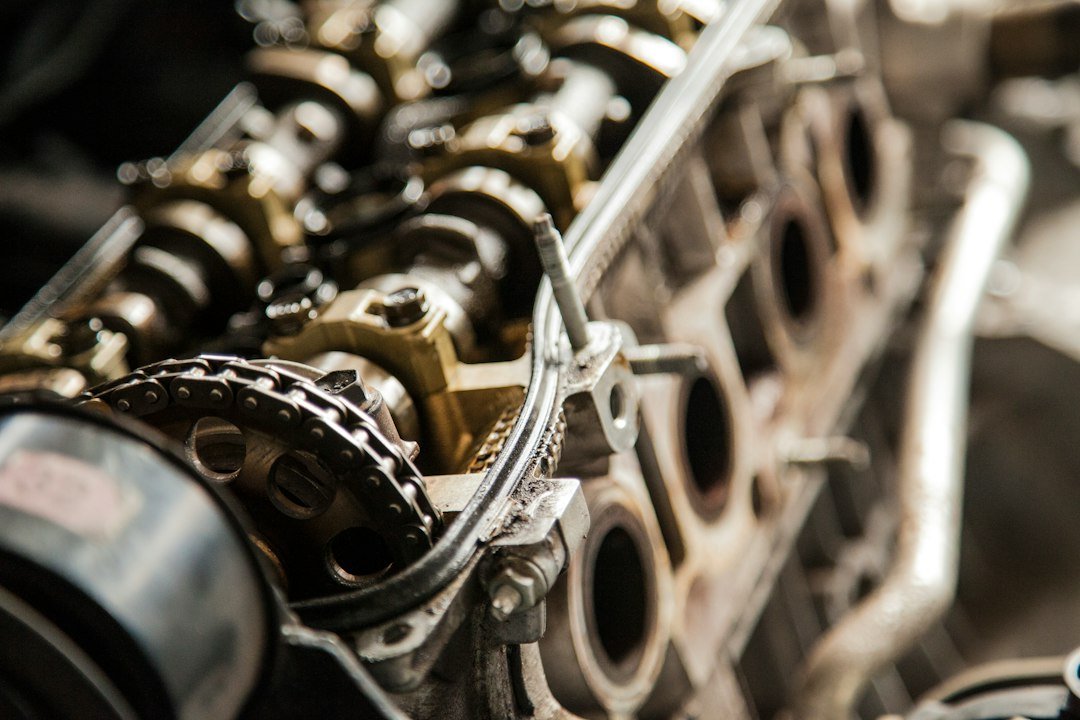
You turn the key before work, and the engine starts as usual. What is the difference between timing belt and timing chain? A timing belt is a reinforced rubber belt with a manufacturer-set replacement schedule, while a timing chain is a metal chain inside the engine that usually lasts longer but depends heavily on proper oil service. Both keep the crankshaft and camshaft(s) moving in precise time so the valves open and close when the pistons are in the right position. Timing is everything.
Neither part is a routine item you can judge by looking through the hood. On many engines, the belt sits behind a sealed plastic cover, and the chain sits inside the engine behind a metal cover where engine oil lubricates it. If either system loses its timing badly enough, the engine may run poorly, fail to start, or suffer internal contact between valves and pistons. That can get expensive.
What is the difference between timing belt and timing chain
The basic job is the same. The crankshaft turns because combustion pushes the pistons down, and the timing belt or chain transfers that rotation to the camshaft so valve movement stays synchronized with piston movement. A four-stroke engine needs this relationship to remain extremely accurate through thousands of revolutions per minute. Small errors matter.
A timing belt has molded teeth on its inner surface and commonly uses high-strength fibers inside the rubber. It runs dry behind its cover rather than in the engine’s oil supply. Rubber ages with heat, mileage, time, and contamination, even when a car has not been driven much. Age counts too.
A timing chain is made of metal links, similar in principle to a bicycle chain but built for a far harsher job. It runs on guides and is kept tight by a tensioner, often one operated partly by oil pressure. The chain itself can stretch over time, although the guides, tensioner, or related components may create trouble before the chain is physically worn out. Oil matters here.
Some modern engines use a wet timing belt, which runs in engine oil. That arrangement does not fit neatly into the old belt-versus-chain rule because it still has a belt replacement interval but also needs the correct oil specification to protect the belt material. Always check the manual for that engine. Engine design wins.
Replacement intervals compared
Timing belt replacement intervals are normally listed by mileage, time, or whichever arrives first. Many vehicles call for replacement somewhere around 60,000 to 105,000 miles, though some schedules are shorter or longer. A belt that has reached its time limit should not be ignored merely because the odometer is low. Rubber does not stop aging.
For example, a car with a 100,000-mile or 10-year belt interval may need the job at 10 years even if it has covered only 45,000 miles. If you bought that car used and cannot document the belt service, treating it as overdue is usually safer than assuming it was done. A receipt is better.
Timing chains generally have no scheduled replacement interval in the maintenance booklet. They are often described as lasting the life of the engine, but that wording does not mean every chain will last forever or that all chain systems are equally durable. Oil changes on time, with the correct oil grade and specification, are the practical maintenance schedule for a chain-driven engine.
A chain can need repair at relatively low mileage if oil levels were run low, oil changes were badly delayed, or the engine has a known design weakness. On the other hand, a well-maintained chain system can run for a very long time without attention. There is no universal mileage number. Verify the schedule with the vehicle maker or a reputable shop using the exact year, engine, and VIN.
Why a belt job includes more than the belt
A timing belt replacement normally involves removing covers, accessory parts, engine mounts, or wheel-well panels to reach the belt. Since the labor is substantial, shops commonly replace the tensioner and idler pulleys at the same time. Those parts have bearings. A seized pulley can destroy a new belt.
On many belt-driven engines, the water pump sits behind the timing cover and is driven by the belt or becomes easy to reach during the same job. Replacing a questionable water pump during belt service can avoid paying much of the same labor again later. It is a sensible bundled repair when the pump is original, leaking, noisy, or known to be a weak point on that engine.
Ask for a written parts list. A proper estimate should make clear whether it includes the belt, tensioner, pulleys, water pump if applicable, coolant, seals, and any accessory belt that must come off. Cheap quotes sometimes omit related parts. Compare the scope, not only the total.
What timing chain repair usually involves
Timing chain work is often more labor-intensive than a belt job because the chain is inside the engine and access can be tight. Some engines place the chain at the transmission side of the engine, which can make removal much more involved. Location changes the bill.
When a chain system needs service, the repair may include the chain, guides, tensioner, sprockets, seals, and sometimes variable valve timing components. Replacing only one visibly worn piece can be false economy if the rest of the system has already worn together. The exact repair depends on the diagnosed fault.
Unlike a belt, a chain may give warning before a major failure. A brief rattle at cold startup, a persistent metallic noise near the timing cover, a check-engine light related to cam and crank correlation, rough running, or difficult starting all justify prompt diagnosis. Do not assume every rattle is the chain. Exhaust shields, accessory pulleys, and low oil level can make similar noises.
What happens if either one fails
The consequences depend on whether the engine is interference or non-interference. In an interference engine, the pistons and open valves occupy some of the same space at different times, so lost timing can allow them to collide. Bent valves and cylinder-head repairs may follow. It can be severe.
A non-interference engine has more clearance, so a broken belt or failed chain may simply stop the engine without piston-to-valve contact. That sounds safer, but it is not a reason to delay scheduled maintenance because you may still be stranded and face towing plus repair costs. Do not guess the engine type based on the badge alone. Confirm it for the specific engine.
There is a practical distinction here. A timing belt can fail with little obvious warning, especially when it is overdue, while a timing chain often produces noise or fault codes as wear builds. Often is not always. Either system can fail abruptly if a tensioner, guide, pulley, or other related component breaks.
How to find out what your vehicle uses
- Check the owner’s manual maintenance section for a timing belt interval or a timing-chain reference. Start there.
- Look up the exact engine, not only the model name, because the same vehicle line can use different engines with different timing systems.
- Review service records for a dated timing belt invoice, including the mileage and the parts replaced.
- If records are missing, ask a dealer or independent shop to identify the system using the VIN and provide the manufacturer schedule.
Do not rely on a seller saying the vehicle has “a chain, so it is maintenance-free.” That phrase leaves out oil history, prior repairs, and the condition of the guides and tensioner. Documentation changes the decision.
Which is better for a buyer
A timing chain is not automatically better, and a timing belt is not automatically a reason to reject a car. A belt gives you a predictable maintenance deadline that you can budget for, while a chain removes that scheduled item but can be costly if its internal components develop a problem. The rest of the vehicle matters more.
For a used-car buyer, a recently documented belt service can be a positive because a major scheduled job has already been handled. A vehicle near its belt interval without records deserves a price adjustment or a plan to complete the service immediately after purchase. Put it in the budget.
For a chain-driven car, listen carefully on a cold start and check the oil level and service history. A smooth, quiet start does not prove the chain is perfect, but a pronounced rattle or warning light should be investigated before buying. A pre-purchase inspection is useful.
FAQ
Can I tell whether I have a timing belt by looking under the hood?
Usually, no. A timing belt is commonly hidden behind a cover, and the engine’s external appearance rarely gives a reliable answer. Your owner’s manual, service records, or VIN-based parts lookup can confirm it. Check the exact engine.
Does a timing chain need oil changes more than a timing belt?
The engine needs regular oil changes either way, but chain systems are directly exposed to engine oil and depend on oil pressure for many tensioner designs. Using the specified oil and avoiding overdue changes is particularly important for chain life. Follow the manual.
Should I replace a timing belt early?
Replacing it before the stated interval can make sense if the belt has oil contamination, the vehicle has unknown history, or related components are being repaired. Otherwise, follow the vehicle maker’s mileage and time schedule. Earlier is not automatically necessary.
Can a broken timing belt be repaired without engine damage?
Yes, on some engines, but it depends on the engine design and what happened when the belt failed. A shop may need to inspect timing components and, in some cases, perform further checks before giving a reliable repair recommendation. Do not keep cranking it.
Related posts
This article is for general informational purposes only and is not mechanical, legal, financial, or insurance advice. Prices, insurance rates, tax credits, and manufacturer-stated fuel economy or EV range are estimates that change over time and vary by vehicle, region, and provider — always verify current figures with a dealer, mechanic, insurer, or official source before making a decision.
Disclosure: This post may contain affiliate links. If you click through and make a purchase, we may earn a commission at no extra cost to you. We only recommend products we’ve researched or genuinely believe in.