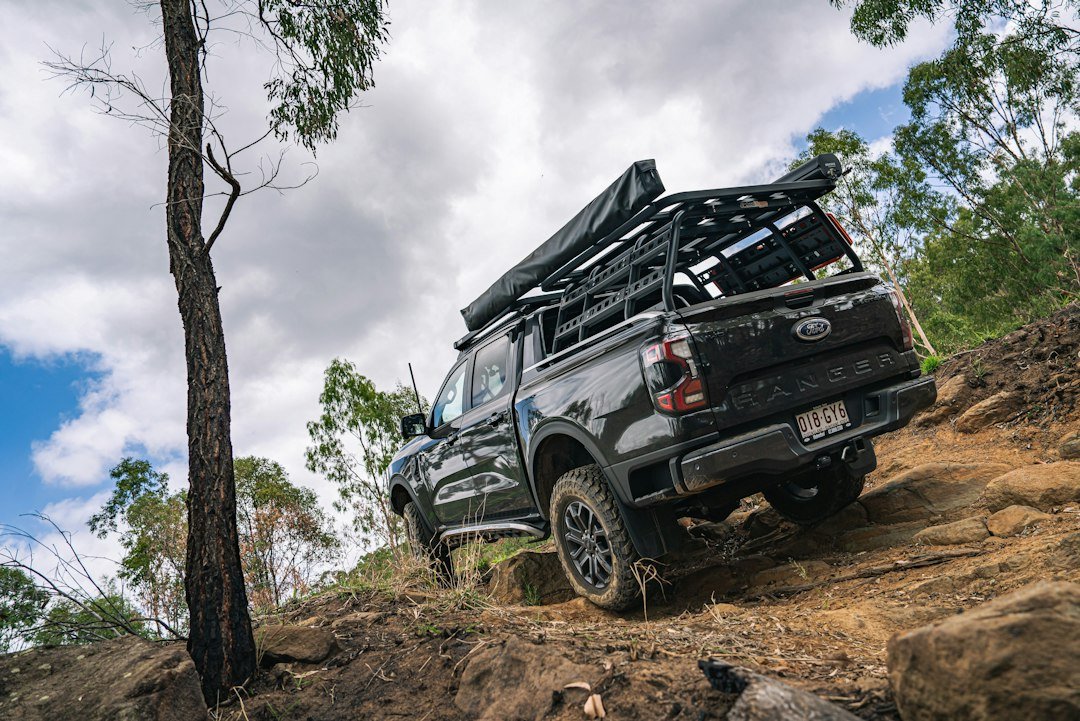
A common misconception is that the biggest tire that fits is automatically the best choice. It rarely is. Knowing how to choose the right tire size for a truck means balancing clearance, load capacity, gearing, braking feel, and the work the truck actually does. That matters even more when you are figuring out how to choose the right tire size for a truck for towing and off-roading, because those jobs pull in different directions.
A taller, wider tire can improve ground clearance and soften the hit from rocks and ruts. It also weighs more, changes the effective axle ratio, and can make a loaded truck feel less eager on hills. Small changes add up. The best setup is usually the largest tire that fits cleanly, carries the required load, and does not make the truck worse at its primary job.
Start with the truck’s factory tire information
Check the tire placard on the driver-side door jamb before shopping. Start there. It lists the original tire size, recommended cold inflation pressure, and often the vehicle’s combined occupant and cargo capacity. The owner’s manual may also identify approved alternate sizes, wheel dimensions, and tire-chain restrictions.
The factory size is not a random choice. Vehicle makers match it to wheel width, suspension travel, steering geometry, brake calibration, axle ratio, speedometer programming, and the truck’s certified load limits. A different size can work well, but it needs to be selected with those systems in mind.
Write down four things before comparing tires:
- Current tire size and wheel diameter
- Wheel width, offset, and backspacing if known
- Front and rear axle ratings from the door-jamb label
- How much trailer weight and payload the truck normally carries
Those details prevent guesswork. They also stop a common mistake: buying an aggressive-looking tire before confirming whether the wheel and suspension can support it.
Read tire sizes before chasing a larger number
Most truck tires use either metric sizing, such as 275/65R18, or flotation sizing, such as 35×12.50R17. Both describe the tire differently. Neither is automatically better.
In a metric size, 275 is the tread-section width in millimeters. The 65 is the sidewall height expressed as 65 percent of that width, R means radial construction, and 18 is the wheel diameter in inches. A 275/65R18 is roughly 32.1 inches tall, although actual measured diameter varies by tire model and inflation pressure.
Flotation sizes are easier to picture. A 35×12.50R17 tire is approximately 35 inches tall, about 12.5 inches wide, and fits a 17-inch wheel. Approximate is the key word. One manufacturer’s 35-inch all-terrain can measure noticeably differently from another manufacturer’s 35-inch mud-terrain once mounted on the same wheel.
Use this quick calculation when comparing metric sizes: multiply the section width by the aspect ratio, convert millimeters to inches, double that sidewall measurement, then add the wheel diameter. The math looks tedious. For example, 285/70R17 has a sidewall near 7.85 inches, so its overall diameter is about 32.7 inches.
Diameter matters more than width for gearing and speedometer error. Width matters more for wheel clearance, fender clearance, hydroplaning behavior, steering weight, and how well the tire works on loose surfaces.
How to choose the right tire size for a truck that tows
For a truck that regularly tows, load rating comes before appearance. Always. The tire must have enough capacity for the actual axle loads when the truck is loaded, not merely enough capacity to support the empty vehicle.
Look at the tire’s load index and, where applicable, its load range. Many half-ton trucks leave the factory with passenger-metric tires, often marked P-metric, while heavier-duty trucks commonly use LT tires. LT tires usually have stiffer construction and can be a sensible choice for heavy payloads, rough access roads, or frequent trailer work, but they may ride firmer and weigh more.
Do not assume an LT tire is automatically safer because it has a tougher sidewall. Its load capacity depends on the exact size, load range, and inflation pressure. The tire’s published load-and-inflation chart is the place to confirm it, and a tire shop can help match the tire to the truck’s axle ratings.
A modest diameter increase is often easier on a tow vehicle than a large jump. Moving from a roughly 32-inch tire to a 33-inch tire changes effective gearing by about 3 percent. Moving to a 35-inch tire changes it closer to 9 percent, which can make a truck with tall factory gearing hunt for lower gears more often while pulling a grade.
That gearing change is real. A truck with 3.31 axle gears and 35-inch tires can feel similar to one with roughly 3.04 gears on its original tires, before accounting for the additional rotating weight. Modern transmissions mask some of that difference, but they cannot erase it when the trailer is heavy and the road climbs.
For frequent towing, consider staying close to the original diameter unless the truck has axle gearing and power to support a larger tire. A narrower all-terrain tire with a suitable load rating often tracks better with a trailer than an oversized, very wide mud-terrain. It can also leave more room for suspension compression and steering movement.
Inflation matters too. Set cold pressure according to the truck’s placard unless a qualified tire professional has provided a load-based pressure recommendation for the exact tire. Never exceed the wheel’s or tire’s maximum pressure. Check pressures before towing days, not after the tires have warmed up.
Choose size differently for off-road use
Off-road driving adds clearance concerns that towing alone does not. Tire diameter raises the axles and differentials off the ground by half of the diameter increase. A two-inch taller tire adds about one inch of differential clearance. That helps. It will not turn a low-hanging skid plate into a high-clearance part.
A taller tire also gives the sidewall more room to flex at reduced pressure, which can improve grip on rocks, sand, and washboard roads. But a larger tire needs room through the entire suspension and steering range, not just while the truck is parked in the driveway.
Check clearance at full steering lock, with the suspension compressed, and in reverse. The last part catches people out. Many trucks clear a tire going forward but rub a mud flap, liner, control arm, bumper corner, or cab mount while backing with the steering turned.
Width is terrain-specific. A wider tire can add flotation on soft sand, especially when aired down appropriately, but it can also throw more mud and rocks, hydroplane sooner on wet pavement, and rub sooner than a narrower tire of the same diameter. For rutted trails, a narrower tire may track the ruts better and fit between obstacles with less body contact.
Tread choice changes the answer. An all-terrain tire is often the practical middle ground for a truck that drives to work, pulls a trailer, and sees dirt roads or moderate trails. Mud-terrain tires can clear mud better, but their weight, noise, wet-road behavior, and tread wear may be a poor trade for a truck that spends most of its time on pavement.
Make sure the wheels, suspension, and brakes agree
Tire size is only one piece of fitment. Wheel offset and backspacing decide where the tire sits relative to the suspension and fender. A wheel that pushes the tire outward may clear an upper control arm but create fender rub. A wheel with too much inward placement can contact steering or suspension parts.
Wheel width matters as well. Tire makers publish an approved wheel-width range for every tire size. Stay within it. Mounting a wide tire on a narrow wheel or stretching a narrow tire across a wide wheel can change tread shape, reduce predictable handling, and make bead retention less forgiving at lower off-road pressures.
Lifts do not guarantee clearance. A suspension lift raises the body relative to the axles, but the tire still swings through an arc as the steering turns and suspension compresses. Leveling kits can also alter alignment angles. After changing tire size, get an alignment and inspect for rubbing under real suspension movement.
Large, heavy tires increase rotating mass. Braking distances, acceleration, steering response, wheel bearing load, and fuel use can all change. The truck may need recalibration for tire diameter so the speedometer, odometer, shift strategy, and driver-assistance systems operate as intended. Ask a dealer or reputable shop what is supported for your specific truck.
Use this practical selection process
- Define the primary job. If the truck tows a travel trailer every month, prioritize load capacity, stable road manners, and modest diameter changes. If it is mainly a trail rig that occasionally tows a light utility trailer, clearance may carry more weight.
- Set a realistic diameter limit. Measure the current tire and inspect available fender, liner, and suspension space. Do not rely only on online fitment claims, because wheel offset and trim level can change the result.
- Choose the required load rating. Compare tire capacity at the intended cold pressure against the truck’s axle ratings and expected loaded axle weight. A public scale can provide useful real-world numbers when the truck and trailer are loaded for a normal trip.
- Pick the tread for the roads you use. An all-terrain pattern usually makes more sense than a deep mud tire if towing and highway miles dominate.
- Confirm fitment before purchase. Verify the tire maker’s wheel-width guidance, wheel offset, brake clearance, and full-lock clearance with a shop that has seen the truck in person.
- Recheck after installation. Inspect for rub marks, retorque lug nuts to the vehicle maker’s specification, verify cold pressures, and confirm speedometer accuracy.
A sensible example is a half-ton pickup on factory 31.5-inch tires that tows a 6,000-pound trailer several times a year and runs forest roads on weekends. A quality 32- to 33-inch all-terrain in a proper load rating may be the sweet spot. A 35-inch mud-terrain could fit after modifications, but it may demand more compromise than the owner actually wants.
FAQ
Can I put bigger tires on my truck without a lift?
Sometimes, yes. Many trucks accept a modest increase in diameter on stock suspension, but exact clearance depends on wheel offset, tire width, trim, and how much the suspension compresses. Check full lock. A fitment check by a reputable tire or suspension shop is safer than trusting a generic online claim.
Are wider truck tires better for towing?
Not necessarily. A wider tire may have a larger contact patch under some conditions, but towing stability depends heavily on construction, inflation pressure, tread design, alignment, and load rating. For highway towing, a properly rated tire close to factory width is often easier to live with than an extra-wide tire.
Do larger tires reduce towing capacity?
The truck’s published towing rating does not automatically change on paper because tires were installed, but larger and heavier tires can reduce usable performance and may affect braking, cooling workload, and drivetrain behavior. Keep the truck within its manufacturer ratings. Verify any modification-related warranty or insurance implications with the dealer and insurer.
Should I choose LT tires for off-roading?
LT tires can be useful when you need stronger construction for sharp rocks, heavy payloads, or repeated towing. They are not mandatory for every trail truck. A P-metric all-terrain can ride better and work well for lighter-duty use when it has adequate capacity and is used within its limits.
Do I need to regear after installing 35-inch tires?
It depends on the truck’s original axle ratio, transmission gearing, engine torque, trailer weight, and how you use it. Some trucks tolerate 35s well enough for light use, while others feel sluggish or shift constantly under load. Drive the setup first if possible, then discuss gearing with a drivetrain shop if towing performance has clearly suffered.
Related posts
This article is for general informational purposes only and is not mechanical, legal, financial, or insurance advice. Prices, insurance rates, tax credits, and manufacturer-stated fuel economy or EV range are estimates that change over time and vary by vehicle, region, and provider — always verify current figures with a dealer, mechanic, insurer, or official source before making a decision.
Disclosure: This post may contain affiliate links. If you click through and make a purchase, we may earn a commission at no extra cost to you. We only recommend products we’ve researched or genuinely believe in.