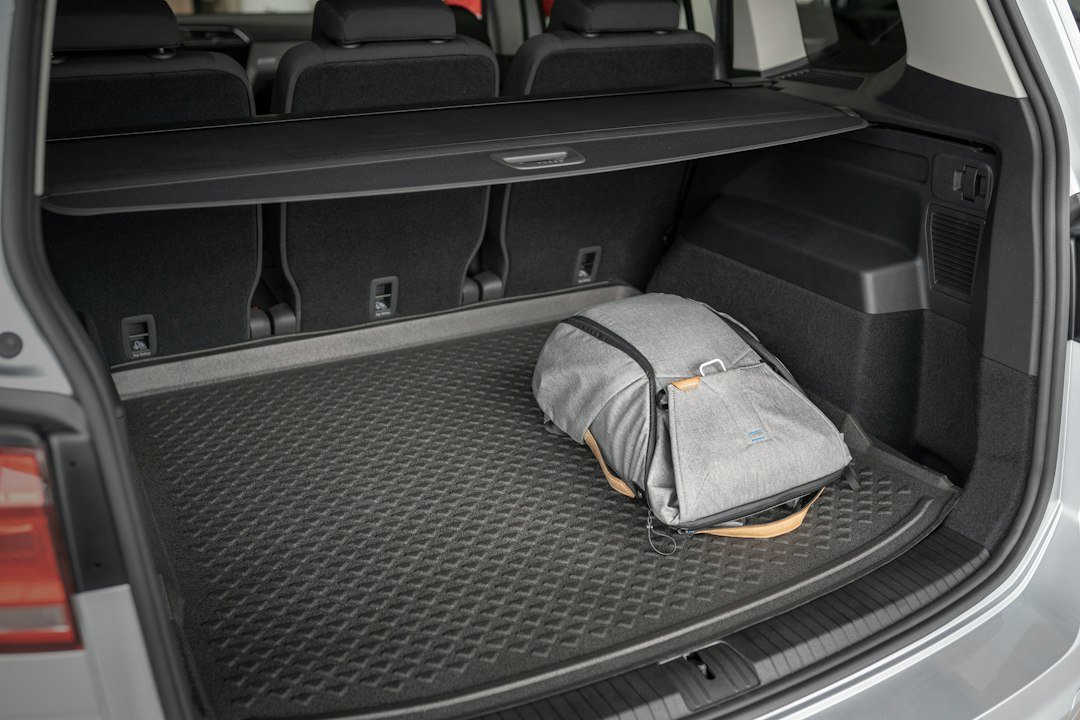
If you’ve ever slammed on the brakes and watched your groceries slide across the trunk or heard loose gear bouncing around behind you, you need the best cargo net for SUV trunk. This isn’t just about tidiness — it’s about preventing distractions and keeping your vehicle safer. A proper cargo net keeps groceries and gear secure while making loading and unloading faster. We’ve tested multiple options and walked through the installation process so you know exactly what works and what doesn’t.
Why Your SUV Needs a Cargo Net Right Now
You’d think a simple cardboard barrier would work — most people don’t realize that loose items actually shift more dangerously than items pinned down. When your trunk contents move during acceleration, braking, or turns, they can block your rear view, create noise that distracts you, and in worst cases, become projectiles in a collision. I’ve been using a quality cargo net for years now, and the difference in peace of mind is enormous.
Keeping groceries and gear secure matters most during daily errands.
Most people don’t realize that cargo nets serve a legal purpose too. Many jurisdictions have specific rules about securing loads in vehicles. Beyond legality, a proper cargo net extends the life of your trunk interior by preventing items from scratching, denting, or staining the surface. Sports equipment, tools, boxes, and bags all stay in place exactly where you put them.
Quick Comparison: Key Cargo Net Features
| Feature | Universal Stretch Net | Cargo Organizer with Straps | Premium Elastic Cargo Net | Trunk Divider System |
|---|---|---|---|---|
| Installation Difficulty | Very Easy | Easy | Moderate | Moderate |
| Cost Range | $15-$30 | $25-$50 | $35-$70 | $60-$120 |
| Best For | Small Items, Quick Trips | Mixed Loads, Organization | Heavy Gear, Long Drives | Permanent Separation, Heavy Use |
| Durability Rating | 2-3 Years | 3-4 Years | 4-6 Years | 5-8 Years |
Before You Buy: Cargo Net Checklist
- Measure your trunk depth, width, and height — bring these numbers when shopping
- Identify where your SUV model has hook points, rings, or anchor locations under the trunk carpet
- Check if your vehicle’s trunk has raised side rails or flat floor geometry, as this affects net fit
- Decide whether you need a basic net or one with multiple pockets and organizer compartments
- Read user reviews specifically about durability and UV resistance if your SUV parks outdoors regularly
- Verify that the cargo net doesn’t interfere with your rear seats when they fold down
- Confirm the net includes all mounting hardware — don’t assume it does
How to Install the Best Cargo Net for SUV Trunk: Step-by-Step
Before you start, gather your supplies: the cargo net itself, the included straps and hooks, and a flashlight to see trunk anchor points clearly.
Condition: Your trunk is empty and dry, and you have access to the anchor points where the net will attach.
Audience: Any SUV owner who’s comfortable with basic hardware installation and wants to avoid expensive professional mounting.
Method: Direct attachment using the vehicle’s built-in tie-down points, typically found under the trunk carpet, behind plastic covers, or on the side walls.
- Pop your trunk and remove any trunk trim panels or carpeting to expose the anchor points on the sidewalls and floor — most modern SUVs have these installed from the factory.
- Lay the cargo net flat on the ground outside your vehicle and inspect it for any manufacturing defects or loose stitching before installation.
- Position the net inside the trunk against the rear seats, making sure it sits evenly and doesn’t bunch up on either side.
- Attach the corner straps to the anchor points on the left side of the trunk first, then the right side — this is where most people give up because they can’t find the anchor points easily.
- Pull each strap firm but not extremely tight; the net should be snug without deforming the trunk shape or preventing your rear seats from folding completely.
- Test the installation by placing a cardboard box or bag inside the net and pushing it hard from multiple angles — it should stay completely stationary.
- Reinstall any trim panels or carpet pieces you removed, and double-check that the net doesn’t interfere with trunk closing.
This is the part that actually matters: verify that the net is secure before you drive. Take a short test drive over a bumpy road and listen for any shifting or rattling sounds coming from the trunk.
Why Most People Choose the Wrong Cargo Net
Cheaper universal nets often have weak elastic or poor stitching at stress points. I’ve been using premium cargo nets long enough to see which ones fail first, and it’s almost always the models with thin material and loose thread stitching at the corners. When you’re keeping groceries and gear secure, you can’t afford a net that stretches out after three months of use.
Don’t buy the cheapest option available.
The best cargo net for SUV trunk isn’t always the most expensive, but it’s rarely the budget option either. Mid-range elasticated nets with reinforced corner anchors typically outperform both the discount models and the over-engineered premium systems that add unnecessary complexity.
My Picks for This
- EZ Cargo Organizer Net — Elastic design with built-in pockets keeps small items separate while keeping groceries and gear secure against rear panel movement.
- Stalwart Expandable Cargo Net — Heavy-duty material with multiple mounting points handles long trips without stretching or sagging over time.
- ORCA Tackle and Gear Net — Specifically designed for outdoor equipment and tools, this net resists UV damage and holds shape even in direct sunlight.
- Windy City Trunk Organizer with Cargo Net — Combines storage pockets with an integrated net system, ideal for drivers who want organization and security in one product.
- Heavy-Duty Universal Stretch Cargo Net — Simple and affordable for occasional use, reliable for grocery runs and weekend trips without premium pricing.
Frequently Asked Questions (FAQ)
Q1. How much does a cargo net for an SUV actually cost?
Pricing ranges from around $15 for basic universal stretch nets to $120 or more for permanent trunk divider systems. Most quality cargo nets that last 4-6 years fall in the $35-$70 range, offering the best value for typical drivers.
Q2. Can I use the same cargo net on different SUV models?
Yes, universal nets work on most SUVs because they attach to standard anchor points. However, trunk shapes vary enough that fit and tension differ between models. Measure your specific trunk before buying to ensure the net doesn’t hang too loose or pull too tight.
Q3. What’s the difference between cargo nets and trunk organizers?
Cargo nets keep items in place with elastic tension alone. Trunk organizers typically include dedicated compartments, pockets, and dividers. For purely keeping groceries and gear secure, a net is simpler and cheaper. For organization and containment, an organizer system offers more structure.
Q4. Will a cargo net damage my SUV’s trunk interior?
High-quality nets with padded or reinforced anchor points won’t damage your trunk. Cheap nets with sharp metal hooks can scratch the interior or anchor points over time. Check that your net includes protective caps or padding at all attachment points.
Q5. How do I know if my SUV’s anchor points are strong enough for the best cargo net for SUV trunk?
Most factory anchor points are rated to hold 50-100 pounds of load. Check your vehicle’s owner manual for specific tie-down specifications. Don’t exceed the rated capacity, and if anchor points feel loose or damaged, have them inspected by a mechanic before installing a cargo net.
Q6. Can I install a cargo net without removing trunk carpet or panels?
It depends on your SUV. Some vehicles have accessible anchor points visible without disassembly, while others require you to lift the carpet or remove trim. Check your owner manual for anchor point locations before purchasing your net.
This post is for informational purposes only and does not constitute professional mechanical advice, legal advice, financial advice, or insurance guidance. Automotive repairs, installations, and modifications involve inherent risks — always consult a certified mechanic or licensed professional before performing any work on your vehicle. Car prices, insurance rates, EV tax credits, product specs, and availability are subject to change without notice and may vary by location, dealership, and individual circumstances. Always verify current details directly with manufacturers, retailers, dealerships, insurance providers, and relevant government agencies before making any purchase or financial decision. Fuel economy figures, EV range estimates, and performance data referenced in this post are based on manufacturer or third-party estimates and may differ from real-world results. This site may contain affiliate links — if you purchase through our links, we may earn a commission at no additional cost to you. Product recommendations are based on general research and editorial judgment; we do not guarantee suitability for your specific vehicle, driving conditions, or personal situation. Always read product instructions, vehicle owner manuals, and safety warnings before use.