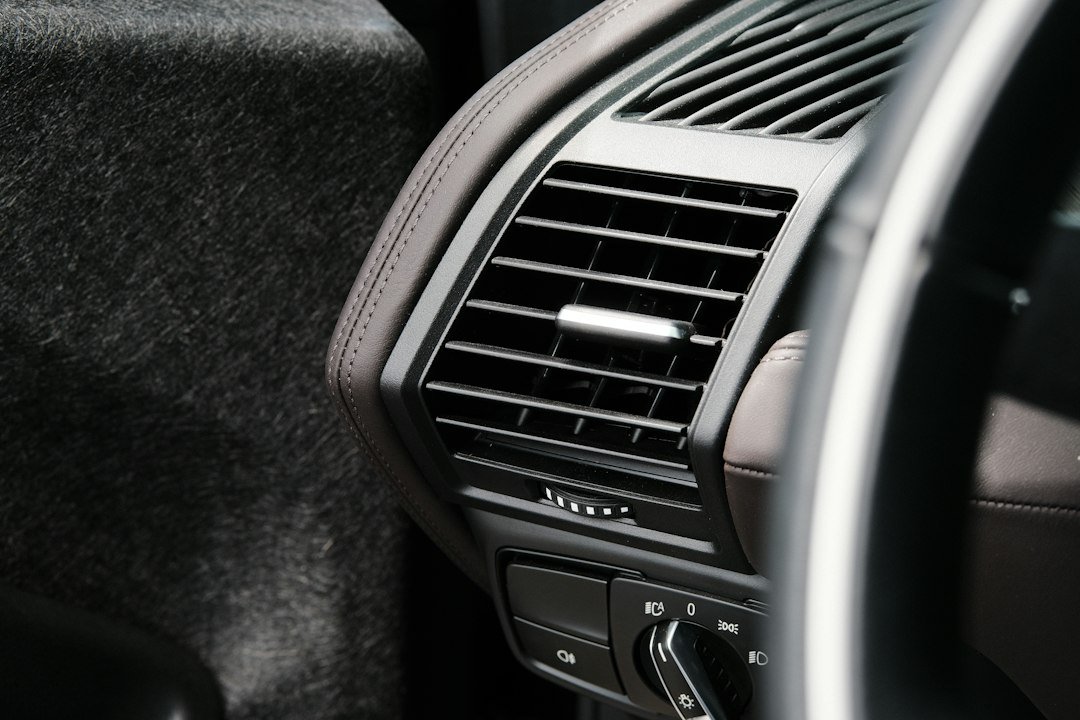
A common misconception is that why is my car ac blowing warm air always means the system simply needs a refrigerant recharge. That is sometimes true, but refrigerant does not normally get used up. If your car AC is blowing warm air, a leak, airflow restriction, electrical fault, or cabin temperature-control problem may be the real cause. Start simple.
Your air conditioning system moves heat out of the cabin. Refrigerant absorbs heat at the evaporator behind the dash, then carries it to the condenser at the front of the vehicle, where airflow releases that heat outside. A compressor keeps the refrigerant circulating. When one part cannot do its job, vent temperature rises fast, especially when the vehicle is parked in sun or sitting in traffic.
Some checks are safe to do at home. Others need AC gauges, leak-detection equipment, and the correct refrigerant handling procedures. Do not open refrigerant lines or vent refrigerant. Besides being unsafe, refrigerant work is regulated in many places.
Why is my car ac blowing warm air
The most common answer is low refrigerant caused by a leak. A small leak may let the AC cool somewhat in spring, then leave it struggling once outside temperatures climb. The system can lose enough charge that its pressure sensor prevents compressor operation, which protects expensive components but leaves you with warm vents.
Leaks often occur at hose fittings, condenser damage, compressor shaft seals, service ports, and evaporators hidden inside the dash. The oily residue around a fitting can be a clue, because refrigerant oil travels with the refrigerant. It is not proof. A shop can use an electronic detector, ultraviolet dye if appropriate, or pressure testing to find the actual source.
A recharge can make the air cold again for a while if the charge is low. That does not repair a leak. If cooling fades again within weeks or months, pay for leak diagnosis rather than repeatedly adding cans.
The next frequent cause is poor airflow through the condenser. This thin heat exchanger sits near the radiator and gets hammered by road debris, bugs, leaves, and stones. Air must move through it. A blocked condenser cannot shed heat well, so vent temperatures may be decent at highway speed but warm up during stop-and-go driving.
Check the front grille area with the engine off and cool. Look for packed debris, bent fins, or plastic bags caught between the condenser and radiator. Use low-pressure water and a soft brush carefully if debris is accessible. Do not flatten the fins. A damaged condenser may need professional replacement.
Cooling fans matter too. Most vehicles use electric fans that should run when the AC is commanded on, although their exact behavior varies by vehicle and outside temperature. If the AC is cold while moving but warm at idle, a failed fan motor, relay, fuse, wiring issue, or fan-control fault moves higher on the suspect list. Watch from a safe distance. Keep hands and loose clothing away because fans can start without warning.
A compressor problem can also leave you with warm air. The compressor may not engage, may have an internal failure, or may be electronically controlled in a way that cannot be judged by looking for an old-style clutch. Modern variable-displacement compressors often work differently than the obvious cycling clutches found on many older cars. A gauge reading and scan-tool data tell a much clearer story.
The cabin blend door is another overlooked cause. This door inside the HVAC housing directs air across the heater core, evaporator, or both. If its actuator strips gears, loses calibration, or sticks, hot air can mix with cooled air even when the AC system itself is healthy. Listen for repetitive clicking behind the dash after changing the temperature setting. That is a useful clue.
A clogged cabin air filter usually does not make the air truly warm. It does reduce airflow, which makes weak cooling feel worse and can lead people in the wrong direction. Replace it if it is dark, packed with debris, wet, or overdue according to the maintenance schedule. It is cheap on many vehicles.
Quick symptoms and likely causes
| What you notice | Possible cause | Useful next check |
|---|---|---|
| Warm at idle, cooler while driving | Condenser fan problem or restricted condenser airflow | Check whether cooling fans operate with AC selected |
| Cold briefly, then warm again | Low refrigerant, freeze-up, sensor issue, or compressor control fault | Have pressures and fault codes checked |
| Airflow is weak from every vent | Clogged cabin filter, blower issue, or blocked intake | Inspect the cabin filter and test blower speeds |
| One side is warm, one side is cold | Dual-zone blend door actuator or HVAC control issue | Change each temperature zone and listen for clicking |
| AC stopped after collision damage | Damaged condenser, line, wiring, or pressure sensor | Inspect the front end and arrange a professional inspection |
| Compressor never seems to activate | Low charge, fuse, relay, sensor, wiring, or compressor failure | Check fuses, then get electrical and pressure testing |
These symptoms narrow the field. They do not confirm a repair. Several faults can create the same complaint, and an AC system can have both a small leak and a weak fan, particularly on an older vehicle.
Checks you can do before booking a repair
Set the system up correctly first. Start the engine, select MAX AC or recirculation, set the temperature to full cold, and choose a medium fan speed. Open the windows for the first minute if the cabin is baking hot, then close them. This clears trapped heat so you can judge the system more fairly.
- Check vent temperature after several minutes. Put a basic thermometer in the center vent if you have one. Outside temperature and humidity change the result, so compare it with how the system behaved on similar days. Feel alone can mislead.
- Confirm the blower works on every speed. A blower that only works on high, or barely moves air, needs a separate diagnosis. Check the cabin filter while you are there.
- Look at the condenser area. With the vehicle off and cool, inspect through the grille for leaves, mud, damaged fins, or obvious impact damage. Do not use a pressure washer close to the fins.
- Observe cooling fan operation. With the engine running and AC selected, see whether the electric fan or fans run when expected. Do not reach into the engine bay.
- Check accessible fuses. Use the owner manual or fuse-box diagram to identify HVAC, blower, and cooling-fan circuits. Replace a blown fuse only with the same rating. A replacement fuse that blows again points to a fault that needs diagnosis.
- Operate every temperature setting. On dual-zone systems, test both sides independently. Clicking, a sudden change from hot to cold, or one warm side can point toward an actuator or control issue.
Stop there if you do not have proper equipment. A cheap recharge kit can appear tempting, especially when a gauge says low, but those single gauges do not show high-side pressure, refrigerant weight, contamination, or whether the compressor is pumping correctly. Overcharging can cool poorly too. It can also damage components.
When a recharge makes sense
A recharge makes sense only after the system is evaluated and the correct refrigerant specification is confirmed from the vehicle label or service information. Different cars use different refrigerants and exact charge weights. Guessing is expensive.
A proper AC service usually includes recovering any remaining refrigerant, checking system pressures, evacuating moisture and air, then charging by weight. The technician may also inspect for leaks before or after charging, depending on the fault and equipment available. Ask what evidence supports the recommended repair. A clear answer should mention a leak location, pressure readings, electrical test result, or failed part.
If a shop recommends a compressor, ask why it failed and whether debris is present in the system. Compressor failures can spread metal contamination through lines, the condenser, and other parts. On some vehicles, replacing only the compressor can lead to another failure if the system is not cleaned and repaired correctly. Repair scope depends on the vehicle.
Problems that are easy to confuse with AC failure
An overheated engine can cause the computer to reduce or disable AC operation on some vehicles. Watch the coolant temperature gauge. If the engine is running hot, shut the AC off, stop driving if temperature continues to climb, and address the cooling-system issue first.
Recirculation settings matter more than people expect. Fresh-air mode pulls hot outside air into the HVAC box, so it can make a marginal AC system feel much worse on a hot day. Recirculation is usually best for initial cabin cooling. Switch to fresh air occasionally if windows fog.
Sunload is real. A black dashboard, large glass area, and a car parked outside can overwhelm an AC system for the first few minutes, even when nothing is broken. Give it a little time. If it never cools after a normal drive, investigate further.
When to see a professional
Book an AC diagnosis if the system has no cooling, loses cooling repeatedly, makes grinding or squealing noises, has visible oily residue at AC components, or blows a fuse more than once. Get help sooner after front-end damage. Condensers and their lines are exposed.
Tell the shop exactly when the problem happens: only at idle, only on hot afternoons, after an hour of driving, or on one side of the cabin. Mention any clicking behind the dash, engine-temperature changes, warning lights, and repairs done recently. Those details cut down diagnostic time and may save you from buying parts based on a guess.
The practical bottom line is simple. Warm AC is often caused by low refrigerant or poor condenser airflow, but the correct repair depends on finding why the system stopped cooling in the first place. Diagnose before recharging. Your wallet will usually be better for it.
Frequently asked questions
Can low refrigerant make my car AC blow warm air?
Yes. Low refrigerant can prevent normal heat transfer or trigger a low-pressure protection setting that stops compressor operation. A low charge usually means refrigerant escaped somewhere. Find the leak if possible.
Why does my AC get cold when driving but warm at a stop?
That pattern often points to insufficient airflow through the condenser at low speed. A cooling fan that does not run, debris in the condenser, or damaged fins are common possibilities. Highway airflow can temporarily hide the issue.
Can I use a store-bought AC recharge can?
You can find them, but they are a poor first move when the cause is unknown. The wrong refrigerant, too much refrigerant, sealant additives, or an undiscovered leak can turn a small issue into a larger repair. Professional testing is safer.
Why is one side of my dual-zone AC warm?
A blend door actuator or its control system is a common reason. Low refrigerant can sometimes create uneven vent temperatures as well. Check both possibilities before approving dash work.
Will replacing the cabin air filter make the AC cold again?
It can restore airflow if the filter is clogged, but it does not repair a refrigerant, compressor, or blend-door fault. Replace the filter if needed anyway. Good airflow makes the system work as intended.
Related posts
This article is for general informational purposes only and is not mechanical, legal, financial, or insurance advice. Prices, insurance rates, tax credits, and manufacturer-stated fuel economy or EV range are estimates that change over time and vary by vehicle, region, and provider — always verify current figures with a dealer, mechanic, insurer, or official source before making a decision.
Disclosure: This post may contain affiliate links. If you click through and make a purchase, we may earn a commission at no extra cost to you. We only recommend products we’ve researched or genuinely believe in.