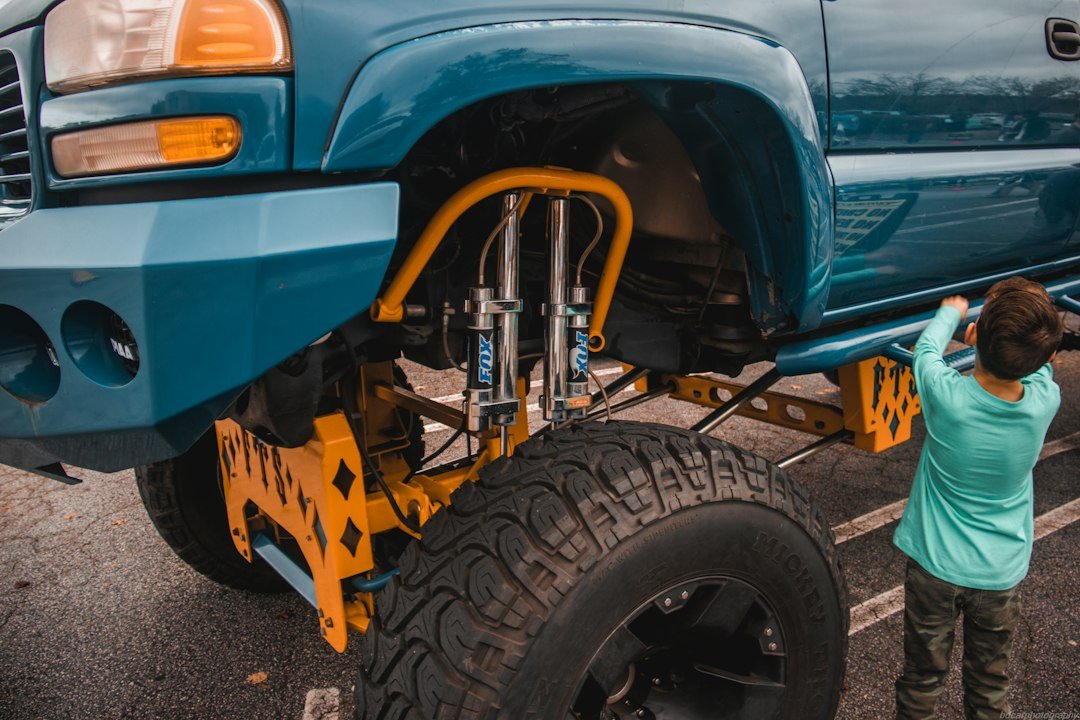
You are standing in a driveway, looking at a clean lifted pickup with big tires, shiny wheels, and a price that seems fair. Slow down. What to check before buying a lifted truck starts underneath it, not at the paint, because a good-looking build can still have worn steering parts, unsafe suspension geometry, or expensive drivetrain problems waiting after the sale. For first-time buyers, what to check before buying a lifted truck comes down to build quality, maintenance history, road behavior, and whether you can insure and legally drive it where you live.
A lifted truck is not automatically a bad buy. Plenty are built carefully and maintained well, but lifting changes suspension angles, steering geometry, braking feel, tire load, and the way parts wear over time. Big tires add stress. The more extreme the lift, the more closely you should inspect every related system.
What to check before buying a lifted truck underneath
Start with the lift itself. Get down low with a flashlight and look for a recognizable lift-kit manufacturer, clean hardware, properly mounted brackets, and components that appear matched to the truck. Details matter. A truck with quality shocks and correctly installed control arms is generally less concerning than one with random spacer blocks, mismatched parts, and hardware that looks recently painted over.
Look for leaks around the shocks, struts, differential housings, transfer case, engine, and transmission. A light film of old grime is common on older trucks. Fresh wet fluid is different. Check for damaged boots on CV axles, torn ball-joint boots, loose sway-bar links, cracked bushings, and bent skid plates that might suggest hard off-road use.
Pay close attention to brackets and welds. Some larger lifts require crossmember drops, track-bar brackets, radius-arm brackets, or custom fabrication, and those parts need to sit square against the frame with no cracked welds, elongated bolt holes, or missing fasteners. Rust is a deal breaker in some places. Surface rust can be normal, but flaking frame steel, swelling seams, or corrosion near suspension mounts deserves a professional opinion before you spend a dollar.
Check the driveshafts and axle angles. On a four-wheel-drive truck, an excessive driveshaft angle can cause vibration, worn universal joints, and transfer-case or differential wear; on an independent front suspension truck, a tall lift can leave CV joints working at a steep angle even when the truck is parked. Look for grease thrown around the underside. That often points to a failing CV boot or universal joint.
Inspect tires, wheels, and steering carefully
Oversize tires are expensive, and uneven wear tells a useful story. Run your hand across each tire tread, then look at the inner and outer shoulders. Cupping, feathering, or one bald edge can indicate poor alignment, tired shocks, loose steering parts, or a truck that has spent a long time with incorrect suspension angles. Do not accept “it just needs an alignment” as a complete answer.
Check the tire date code too. Tires can have plenty of tread but still be old, hard, cracked, or unsafe for regular road use. A set of quality truck tires can materially change the real purchase cost. Ask whether the spare matches the tire diameter, especially on four-wheel-drive models where a badly mismatched spare should only be used temporarily.
Turn the steering wheel lock to lock while parked, then look inside the wheel wells. Watch for tire rubbing on plastic liners, brake hoses, control arms, sway bars, or the bumper at full lock. Small rubbing marks are common on modified trucks. Heavy rubbing means the owner may have chosen wheels with the wrong offset, tires that are too large, or a lift that was never set up correctly.
| What you see | What it can suggest | Best next step |
|---|---|---|
| Feathered tire tread | Alignment or steering wear | Request an alignment report and inspect tie rods |
| Grease near a wheel or axle | Torn CV boot or failing joint | Have a shop identify the source |
| Steering wheel shake | Wheel balance, tire issue, or loose front end | Test drive and arrange inspection |
| Fresh paint on brackets | Cosmetic refresh or hidden corrosion | Inspect seams, bolts, and frame closely |
| Driveline vibration | Incorrect pinion or driveshaft angle | Do not buy without diagnosis |
Also inspect the wheels for cracks, curb damage, missing center caps, and incorrect lug nuts. Wheel spacers deserve extra scrutiny. They can be used safely when high-quality parts are installed correctly, but cheap spacers, damaged studs, or improper torque are not a gamble worth taking.
Drive it on more than one road
A short lap around the block is not enough. Start with a cold engine if possible, because cold starts can reveal smoke, noisy valvetrain parts, weak batteries, or delayed transmission engagement that a warmed-up truck hides. Listen first. Then drive at neighborhood speed, on a rougher road, and at highway speed if the seller allows it.
The truck should track straight without constant steering correction. Some lifted solid-axle trucks have more wandering than a stock truck, especially with large mud-terrain tires, but severe drift, a loose steering wheel, or repeated correction is not normal. Hit a few mild bumps. Notice whether the truck clunks, bottoms out, bounces repeatedly, or pulls under braking.
At 45 to 70 mph, feel for vibration through the seat, floor, and steering wheel. Steering-wheel vibration often points toward tires, wheels, or front-end components, while a vibration felt through the floor can be driveline-related, although diagnosis depends on the truck. Let off the throttle, then accelerate smoothly. Changes in vibration during acceleration and deceleration are useful clues.
Test four-wheel drive only where it is appropriate and safe. On many part-time systems, do not engage four-wheel drive on dry pavement because driveline bind can occur. Use a loose or low-traction surface if available, confirm that the system engages and disengages, and make sure warning lights behave normally.
Ask for proof of the build and maintenance
Receipts are valuable. Ask who installed the lift, how high it is, which parts were used, whether the truck was aligned afterward, and whether steering or driveline corrections were added. A seller who can show parts invoices, alignment records, tire receipts, and routine service records gives you far more to work with than one who only says the truck was “professionally built.”
Find out whether the differential gears were changed after larger tires went on. This matters. Very large tires with stock gearing can make a truck feel sluggish, hunt between transmission gears, and place more load on the transmission, although the effect depends on tire size, engine, axle ratio, and truck weight.
Ask direct questions about use. Has it towed? Has it been off-road? Was it ever in deep water? Has it had axle, transmission, or transfer-case repairs? Off-road use alone does not condemn a truck, but honest answers combined with physical evidence help you judge how it was treated.
Check legal, insurance, and ownership details
Lift laws vary by state, province, territory, and country. Verify local rules before buying, including limits on bumper height, tire coverage, headlight height, mud flaps, wheel protrusion, inspection requirements, and modifications to lighting. Paperwork matters. A truck can pass a casual driveway look and still fail an annual inspection or roadside check in your area.
Call your insurer with the vehicle identification number and a list of declared modifications before you commit. Some insurers cover modified vehicles under standard policies, while others may limit coverage or require additional documentation. Do this early. Do not assume the seller’s insurance setup will apply to you.
Check the title, vehicle identification number, and history report for consistency, then compare the truck’s condition with the mileage shown. Look for a salvage or rebuilt title, odometer discrepancies, repeated ownership changes, and accident records. A history report is useful, but it cannot replace a physical inspection because repairs and modifications are not always reported.
Use a first-time buyer inspection plan
Bring a flashlight, paper towel, tire-pressure gauge, and a friend if possible. Take your time. A seller who refuses a reasonable inspection, will not allow a test drive, or pushes for immediate payment gives you a clear reason to walk away.
- Inspect the frame, suspension mounts, shocks, axles, brake lines, and lift hardware before the test drive.
- Check all four tires for matching size, uneven wear, cracking, and adequate tread.
- Start the truck cold, watch the dash lights, and listen for unusual noises.
- Drive at low and highway speeds, then test braking, steering response, and vibration.
- Review maintenance receipts, lift-kit details, title status, and modification paperwork.
- Pay an independent shop for a pre-purchase inspection before final payment.
A pre-purchase inspection is money well spent on a modified truck. Ask the shop to inspect steering and suspension play, brake condition, wheel bearings, alignment-related wear, axle and driveshaft angles, fluid leaks, rust, diagnostic trouble codes, and the general quality of the installation. Get the findings in writing. Then use them to decide whether the truck is fairly priced or whether you should keep looking.
Build a repair reserve into your budget. If a truck is listed at $28,000 and an inspection identifies tires, ball joints, brakes, and an alignment totaling a few thousand dollars, its real cost is higher than the asking price even if the seller will not negotiate. That math is simple. Do not spend every available dollar on the purchase itself.
FAQ
Is a lifted truck a bad choice for a first-time buyer?
No, but a mildly lifted truck with documented parts and maintenance is usually a safer first purchase than an aggressively modified one. Keep it simple. A well-kept truck with sensible tire size, quality suspension components, and stable road manners is easier to live with than a tall build that needs constant adjustment.
How high is too high for a used lifted truck?
There is no single measurement that makes a truck bad. A larger lift increases the chance of altered steering, driveline, and brake-line requirements, so the inspection standard should rise with lift height and tire size. Look at the execution. A modest lift installed poorly can cause more trouble than a taller setup built with the correct supporting parts.
Should I avoid trucks with wheel spacers?
Not automatically. Inspect them carefully. Confirm the spacers are quality components, sit flush, have proper thread engagement, and show no cracks, stripped studs, or loose hardware; if you cannot verify that, have a shop inspect the setup or consider another truck.
Can a lifted truck be aligned properly?
Many can. Proper alignment depends on the truck’s suspension design, lift height, adjustment range, and whether the builder installed correction parts when needed. Ask for a recent alignment printout. If tire wear is uneven or the truck wanders, do not assume an alignment alone will solve the underlying issue.
What is the biggest red flag when buying a lifted truck?
A seller who cannot explain what was installed, who installed it, or why the truck has obvious tire wear, leaks, steering looseness, and vibration is a major red flag. Walk away. There are enough used trucks available that you do not need to buy someone else’s unfinished project.
Related posts
This article is for general informational purposes only and is not mechanical, legal, financial, or insurance advice. Prices, insurance rates, tax credits, and manufacturer-stated fuel economy or EV range are estimates that change over time and vary by vehicle, region, and provider — always verify current figures with a dealer, mechanic, insurer, or official source before making a decision.
Disclosure: This post may contain affiliate links. If you click through and make a purchase, we may earn a commission at no extra cost to you. We only recommend products we’ve researched or genuinely believe in.