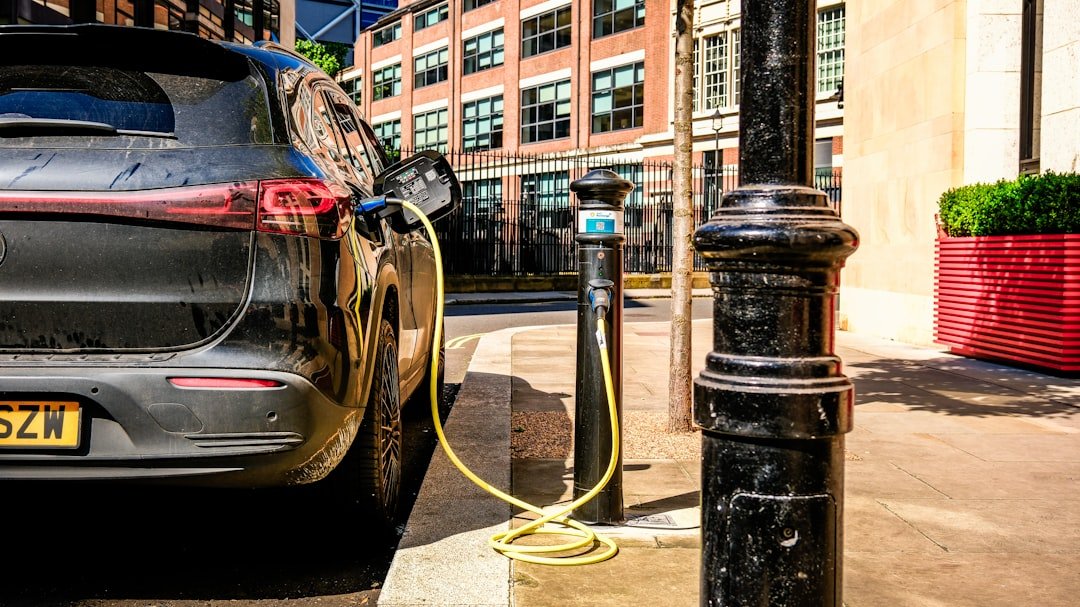
A common misconception is that an EV only makes sense for drivers with a long daily commute. The opposite is usually true. For the question ev vs hybrid which is right for me, an EV often fits city driving better because urban miles use less energy than fast motorway miles, and regenerative braking recovers some energy when you slow down. That matters. If you have reliable overnight charging where you live, my clear recommendation for the most common city-driving case is an EV, not a hybrid. A hybrid still has strong reasons to exist, especially when charging is unavailable or your weekends involve frequent long-distance driving.
EV vs hybrid which is right for me for city driving
Buy an EV if you drive mostly around town, can plug in at home or work several times a week, and do not routinely exceed its real-world range in a day. It is the simpler daily experience. You leave home with a charged battery, drive quietly through traffic, and skip fuel-station stops for most normal use. Electric motors also deliver their strongest pull immediately, which makes pulling into gaps, joining roundabouts, and moving away from traffic lights feel easy without needing a large engine or high revs.
A conventional hybrid wins when you cannot charge consistently. Simple as that. It fuels up in minutes, needs no change to your parking setup, and usually returns its best fuel economy in low-speed traffic where its battery and electric motor can assist the petrol engine. That is why vehicles such as the Toyota Prius and Toyota RAV4 Hybrid remain sensible city choices for apartment dwellers, renters, or anyone whose parking space is far from an outlet. You still burn fuel, but typically much less than in a comparable non-hybrid petrol SUV.
Do not confuse a hybrid with a plug-in hybrid. They are different. A regular hybrid charges its small battery through the engine and regenerative braking, so you never plug it in. A plug-in hybrid has a larger battery and can cover a limited distance on electricity, but its advantage drops sharply if you rarely charge it because it carries both a battery system and an engine. For many buyers, a full EV or an ordinary hybrid is the cleaner decision.
Why an EV suits stop-start traffic
City driving is where an EV feels most natural. There is no idling engine at lights, no conventional gear changes, and very little noise when creeping through congestion. Regenerative braking slows the car when you lift off the accelerator and sends some energy back to the battery. It cannot recover all the energy used to get moving. Still, it reduces waste compared with heating brake pads at every red light, and it can make one-pedal driving especially relaxing once you have adjusted to it.
Winter changes the picture. Cold weather can reduce EV range because the battery and cabin need energy to stay warm, while short trips may not give the system much time to settle into an efficient operating temperature. A hybrid also uses more fuel in cold urban use, since its engine may run to warm itself and provide cabin heat. Neither escapes physics. Check winter range reports for the exact EV you are considering, then compare that figure with your longest normal day rather than your average commute.
Most urban drivers do not need a huge battery. Bigger is not always better. A modest battery can be enough if you charge at home and normally cover 20 to 50 miles a day, while a larger battery can add purchase cost, weight, and charging time. The right target is comfortable margin. If your longest ordinary day is 70 miles, an EV that delivers roughly double that in typical conditions gives room for cold weather, detours, battery aging, and an occasional missed charge.
Charging is the real dividing line
Home charging matters more than public fast-charging speed for a city buyer. A car that sits parked overnight has plenty of time to add back a normal day’s energy on a suitable home charger. That routine is easy. You plug in when you arrive, then wake up with usable range instead of making a separate stop for fuel. Public charging can work, but it adds planning, waiting, and the possibility that a nearby charger is occupied or out of service.
Before ordering an EV, inspect your actual parking situation. Look at where the car sleeps. A detached house with off-street parking is usually the straightforward case, although an electrician should check the electrical supply and local installation requirements. A rented flat, shared garage, kerbside space, or building with restrictive parking rules needs more homework. Do not buy based on a promise that chargers will be installed later unless you have written approval and a realistic timeline.
A useful test takes one week. Track where you park each night, your daily miles, and every longer trip. Then ask whether the car could recharge while parked without adding a special errand. If the answer is yes on five or more nights each week, an EV is likely to fit well. If the answer is no most weeks, choose a conventional hybrid unless dependable workplace or nearby charging genuinely covers the gap.
Running costs and purchase price
An EV usually costs less per mile when home electricity is reasonably priced compared with petrol. The exact gap varies. Electricity tariffs, public charging prices, fuel prices, insurance, registration fees, and local taxes all change by region, so use current figures from your utility, insurer, dealer, and government sources before signing anything. Public rapid charging can cost much more than charging at home, which is another reason a city EV buyer should treat reliable home or workplace charging as part of the vehicle purchase.
Here is a simple working example. Say an EV uses 30 kWh per 100 miles and your home electricity costs 18 cents per kWh. That works out to about $5.40 per 100 miles before charging losses. A hybrid returning 50 mpg at $3.50 per gallon costs about $7 per 100 miles. The difference is useful, but it may not erase a much higher purchase price quickly, especially if you drive few miles each year. Run the same math with your local prices.
Maintenance can favor the EV. There is no engine oil, spark plugs, exhaust system, or conventional automatic transmission service in the usual sense. Brake pads may also last longer with strong regeneration. Tires are the exception. Many EVs are heavy and have instant torque, so aggressive starts and low tire pressures can wear tires quickly. Check pressures regularly. A hybrid still needs engine-related maintenance, but it is generally a mature, well-understood system and can be inexpensive to keep if you follow the factory schedule.
Insurance deserves a quote before you commit. Do this early. Some EVs cost more to insure because repair networks, parts availability, battery-related procedures, and vehicle values can affect claims costs. That does not mean every EV is expensive to insure, and hybrids can also be costly depending on the model and driver. Get quotes using the exact trim and postcode or ZIP code. A cheap lease payment can look very different after insurance is added.
Where the hybrid is the better answer
Pick the conventional hybrid if your car must handle city errands and spontaneous long trips without any charging plan. This is its advantage. You can use the electric assistance in town, then refill almost anywhere on a holiday drive or family visit. It is also the safer choice for drivers who live in flats with uncertain charger access, cannot install a home charger, or park on the street in an area where public chargers are scarce or regularly blocked.
A hybrid can also make more sense if you tow regularly, travel through remote areas, or have one car covering several drivers with unpredictable schedules. Range is not the only issue. Charging stops on a long EV trip may be easy on one major route and inconvenient on another, particularly when you are towing, travelling in severe weather, or arriving with a low battery after an unexpected detour. Check the routes you actually take, not an ideal route shown in an advertisement.
There is a financial case too. If an equivalent EV costs substantially more after any available incentives, and you only drive a small annual mileage, a hybrid may be cheaper overall even with higher fuel use. Keep the comparison honest. Include purchase price, finance cost, insurance, charging equipment, fuel or electricity, scheduled maintenance, and expected resale value. Tax credits and incentives have eligibility rules that change, so verify them through official sources rather than relying on a dealer advert or an old online calculator.
How to choose the right vehicle
- Measure your longest normal day. Include school runs, work, errands, and regular evening trips. Ignore the once-a-year holiday for this step.
- Confirm charging before shopping. Identify the exact parking space, power source, access permissions, and likely installation cost.
- Compare real use, not brochure claims. Look for independent cold-weather and motorway range impressions for the specific vehicle, wheel size, and battery.
- Price the whole ownership picture. Get insurance quotes and calculate energy or fuel costs with your own annual mileage.
- Test drive both powertrains. Pay attention to brake feel, low-speed smoothness, visibility, rear-seat space, and how easily the vehicle fits your parking space.
For the average urban owner with a driveway or assigned charger, the EV is the better daily tool. It is quieter in traffic, cheaper to energize in many areas, and better matched to short stop-start trips. That is the straightforward call. Choose the hybrid when charging is a hassle rather than a habit. A car should simplify your week, and the best powertrain is the one that works with your real parking and travel pattern.
FAQ
Is an EV cheaper than a hybrid for city driving?
Often, yes, when you charge mostly at home. Electricity per mile is frequently cheaper than petrol, and EVs avoid several routine engine services. Purchase price and insurance can change the result. Compare the total cost over the years you expect to own the car, not only the energy bill for one month.
Can I own an EV without home charging?
You can, but it is less convenient. Public charging may work well if chargers are close, reliable, and available when you need them, while workplace charging can make the arrangement much easier. For most people without dependable charging where they park, a conventional hybrid is the lower-stress choice.
Does a hybrid work well in heavy city traffic?
Yes. It works very well. A conventional hybrid can shut off its engine at stops and use electric assistance at low speeds, which is why its fuel economy is usually better in town than on a fast open road. It still needs petrol and regular engine maintenance.
Should I buy a plug-in hybrid instead?
Only if you will plug it in often. A plug-in hybrid can make sense for a short daily commute with regular charging and occasional long trips, but it loses much of its appeal when driven mainly on petrol. Check its electric range, cargo space, fuel economy with a depleted battery, and charging access before choosing one.
Related posts
This article is for general informational purposes only and is not mechanical, legal, financial, or insurance advice. Prices, insurance rates, tax credits, and manufacturer-stated fuel economy or EV range are estimates that change over time and vary by vehicle, region, and provider — always verify current figures with a dealer, mechanic, insurer, or official source before making a decision.
Disclosure: This post may contain affiliate links. If you click through and make a purchase, we may earn a commission at no extra cost to you. We only recommend products we’ve researched or genuinely believe in.