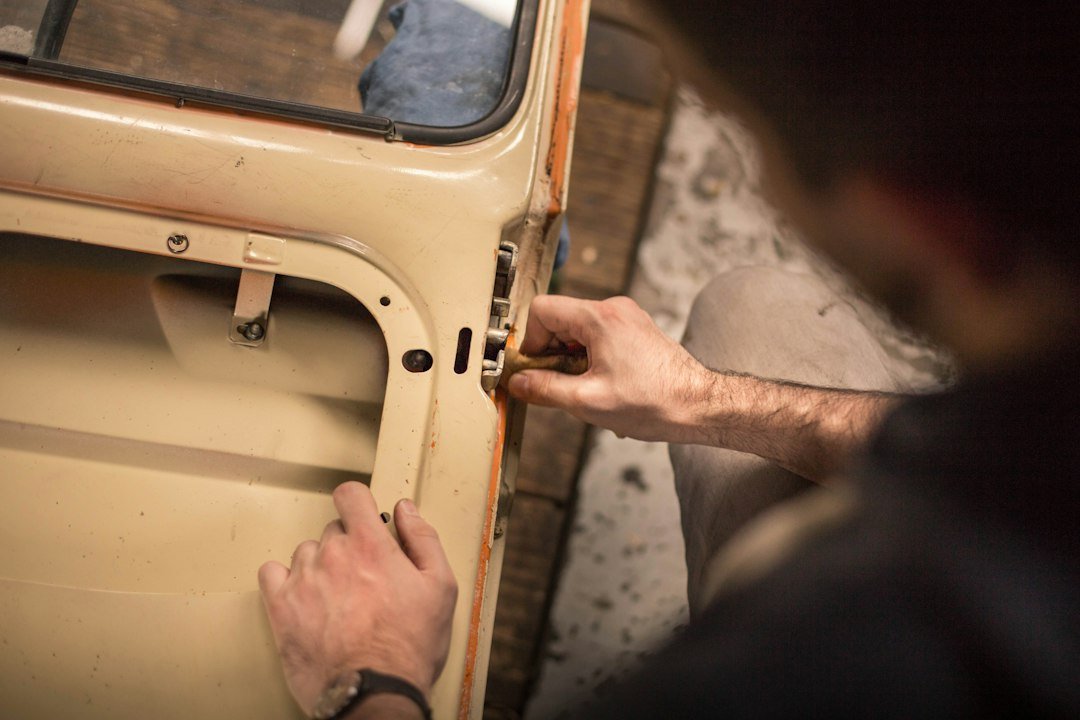
To fix a sticking car door lock at home, clean the affected lock or latch, then use a lock-safe dry lubricant before assuming a part has failed. How to fix a sticking car door lock depends on where it sticks: the key cylinder, the latch on the door edge, the interior lock mechanism, or the electric actuator. Start small.
A little diagnosis prevents a lot of unnecessary door-panel removal, especially because modern doors hide plastic clips, moisture barriers, wiring, and side-impact hardware behind the trim. Test the lock with the door open first. That gives you a clear view of the latch and removes the risk of getting locked out while you work.
Find where the car door lock is sticking
There are four common trouble spots, and each feels different in use. Pinpoint it first.
- Key cylinder problem: The key is hard to insert, hard to turn, or will not turn unless you wiggle it. The outside keyhole is the likely issue.
- Door latch problem: The door will not latch cleanly, will not release, or needs a hard slam before it stays shut. Look at the latch claw on the trailing edge of the door.
- Linkage or interior mechanism problem: The inside lock button, manual lever, or outside handle feels stiff, loose, or does not move through its full travel. The fault may be behind the door panel.
- Power-lock problem: The key works, but the remote, interior switch, or automatic locking function struggles, clicks, or works only sometimes. The actuator, wiring, fuse, or low vehicle-battery voltage may be involved.
Weather matters too. A lock that sticks only after freezing rain may simply have ice in the cylinder or frozen moisture in the latch. A lock that has been getting worse for months is more likely dealing with old grease, corrosion, a weak actuator, or worn internal parts.
Tools and supplies to gather
You do not need a full workshop for the first round of repairs. Use products meant for locks.
- Clean microfiber cloths or paper towels
- Flashlight
- Dry PTFE lock lubricant or graphite lock lubricant for the key cylinder
- Silicone spray or dry PTFE lubricant for latch pivots and moving metal parts
- Compressed air, if available
- Plastic trim tools and a screwdriver set if the door panel must come off
- Painter’s tape to protect painted edges during panel work
Avoid soaking the key cylinder with heavy oil, grease, or general-purpose penetrating spray. It may free the lock briefly. Then it collects dust and can turn into sticky grit inside the small cylinder pins.
Some locksmiths prefer dry PTFE because it leaves less messy residue than graphite, while graphite remains a common choice for traditional metal key cylinders. Either can work when used sparingly. Follow the lubricant label, especially if your vehicle has a proximity key, electronic key module, or a covered key cylinder.
How to fix a sticking car door lock at home
1. Test the lock with the door open
Park on level ground, switch the vehicle off, and lower the window on that door if possible. Keep the key with you. With the door open, operate the outside handle, inside handle, manual lock control, key cylinder, and power-lock switch one at a time.
Watch the latch on the door edge as you do this. The rotating claw should move freely and return under spring pressure. If the claw is already rotated into the closed position while the door is open, do not slam the door against the striker.
To reset a latch that has accidentally clicked shut, pull and hold the inside or outside door handle while using a screwdriver to gently rotate the latch claw back to its open position. Keep fingers clear. The latch can snap back quickly.
2. Clean and lubricate the key cylinder
If the key is the part that sticks, inspect the key before blaming the lock. A visibly bent, worn, cracked, or damaged key can bind in an otherwise healthy cylinder. Try the spare key if you have one.
Blow loose debris out of the keyway with short bursts of compressed air. Do not jam objects inside. Insert the narrow applicator straw only at the entrance, apply a brief amount of dry lock lubricant, then insert and remove the key several times without forcing it.
Wipe the key clean after each cycle, because dirt pulled from the cylinder can cling to it. Turn the key gently through locking and releasing several times. If it still needs excessive force, stop before the key twists or breaks.
A key that turns only when pulled outward a millimeter or pushed inward may point to worn cylinder components rather than simple dryness. That is a useful clue. A locksmith or repair shop can usually assess whether the cylinder can be repaired or should be replaced.
3. Clean the latch and striker area
If the door itself sticks or needs a hard push, inspect the latch claw and the striker loop on the body. Road grime, dried lubricant, surface rust, and old grease can make the latch slow to return. This is common.
Use a cloth to remove visible dirt from the latch opening, moving claw, and surrounding metal. Spray a modest amount of silicone or dry PTFE lubricant onto the latch pivot points and moving joints, not all over the painted door edge. Work the latch open and closed repeatedly with the door open.
Also inspect the body-mounted striker loop for scuffs or fresh metal wear. A door that has sagged slightly can force the latch against the striker, making it feel like a lock problem. Do not loosen the striker bolts casually. Its position affects whether the door closes safely and seals against wind and water.
If the latch improves after cleaning but becomes sticky again within days, look for thick old grease deeper in the mechanism or water entering through a damaged door seal. A shop can clean or replace the latch if its internal spring is weak or corroded. Parts vary by vehicle.
4. Check the manual lock linkage
If the lock knob is stiff, loose, or does not move far enough, the linkage behind the trim may be binding or disconnected. Remove the door panel only if you can identify the fasteners and have a plan for the clips. Take photos as you go.
Most panels have screws near the pull handle, armrest, speaker area, or behind small trim caps, followed by push clips around the outer edge. Plastic trim tools help. Pulling a panel straight off without finding hidden screws can crack the panel or tear its mounting points.
Once inside, look for a rod or cable connecting the interior lock control, outside handle, key cylinder, and latch assembly. Check that plastic retaining clips are fully seated and that no rod is bent or rubbing the window track. Move the lock control slowly while watching the linkage.
Use only a small amount of suitable lubricant on exposed pivot points. Keep lubricant away from electrical connectors, window regulator cables, and the adhesive edge of the water barrier. Reattach the moisture barrier carefully. It helps keep rainwater from reaching the cabin and door electronics.
5. Troubleshoot a slow power lock
A power lock that clicks, moves slowly, or works only after several presses may have a tired actuator, a binding latch, weak wiring connection, or low system voltage. Start with the simple checks. Test every door lock using both the remote and the interior switch.
If all locks are slow, check the vehicle battery condition and look for other electrical symptoms such as slow cranking or dim interior lights. If only one door is affected, the actuator or its wiring is more likely than the main battery. Check the owner’s manual for the relevant fuse location before touching fuses.
Listen closely while operating the faulty lock. A strong click with no movement can mean a jammed linkage or latch. A weak buzz or intermittent response can point toward an actuator motor or electrical connection, though door-panel inspection is needed to separate those faults.
Do not keep cycling a struggling actuator dozens of times. It can drain the battery and may leave the door stuck locked or open at the worst time. If the door must remain secure, use the mechanical key and arrange a proper repair soon.
When to stop and get help
Stop DIY work if the door will not stay latched, the lock traps the key, the key is bending, or the door cannot be opened from inside during an emergency. Those are safety issues. A door that can open unexpectedly needs attention before normal driving.
Also get help when the latch is heavily rusted, the actuator is buried in a complicated cable assembly, or the vehicle has side airbags and you are not confident removing the door trim. Airbag wiring connectors are often marked, but layouts differ. Disconnecting the battery may be specified in the factory procedure, and some vehicles need settings reset afterward.
A locksmith is often the sensible choice for a key cylinder that binds or has a broken key inside. A repair shop or dealer is usually better for latch adjustment, power-lock actuator replacement, damaged wiring, or a door that does not line up with the striker. Ask for a diagnosis before authorizing parts.
Keep the lock from sticking again
Operate the mechanical key occasionally, even if you normally use the remote. It keeps the cylinder from sitting untouched for years. This matters on vehicles with hidden emergency keyholes behind a handle cap.
Clean grime from the latch area during routine washing and use a light, appropriate lubricant when the latch begins to feel dry. Avoid blasting high-pressure water directly into the keyhole or door-handle seams. In freezing weather, keep a lock de-icer outside the vehicle, not in the glove box.
If a door begins requiring a shoulder shove or a hard slam, inspect it early rather than adding more lubricant indefinitely. Mechanical wear rarely gets better on its own. Catching a sticky latch before it fails can save you from a door that will not close in the rain.
Frequently asked questions
Can I use WD-40 on a sticking car door lock?
A general-purpose water-displacing spray may loosen moisture or grime temporarily, but it is not usually the best final lubricant for a key cylinder because residue can attract dirt. Use a dry lock lubricant instead. For the latch mechanism, use a lubricant approved for moving automotive latch parts.
Why does my car door lock stick only in cold weather?
Moisture can freeze in the key cylinder, latch, or door seal area, and old grease thickens when temperatures fall. Use a proper lock de-icer for a frozen keyway. Do not pour hot water on the lock, because it can refreeze and may damage nearby trim.
Why does the key turn but the door stay locked?
The key cylinder may be turning without fully moving the linkage to the latch, or the latch itself may be seized. Remove the door panel only after testing the inside lock control and handles. A disconnected retaining clip or failed latch mechanism can cause this symptom.
How do I know if the door lock actuator is bad?
A failing actuator often works intermittently, moves slowly, makes a weak clicking or buzzing sound, or does nothing while other doors lock normally. Check the latch and linkage for binding first. A replacement actuator may not solve a mechanical jam.
Related posts
This article is for general informational purposes only and is not mechanical, legal, financial, or insurance advice. Prices, insurance rates, tax credits, and manufacturer-stated fuel economy or EV range are estimates that change over time and vary by vehicle, region, and provider — always verify current figures with a dealer, mechanic, insurer, or official source before making a decision.
Disclosure: This post may contain affiliate links. If you click through and make a purchase, we may earn a commission at no extra cost to you. We only recommend products we’ve researched or genuinely believe in.