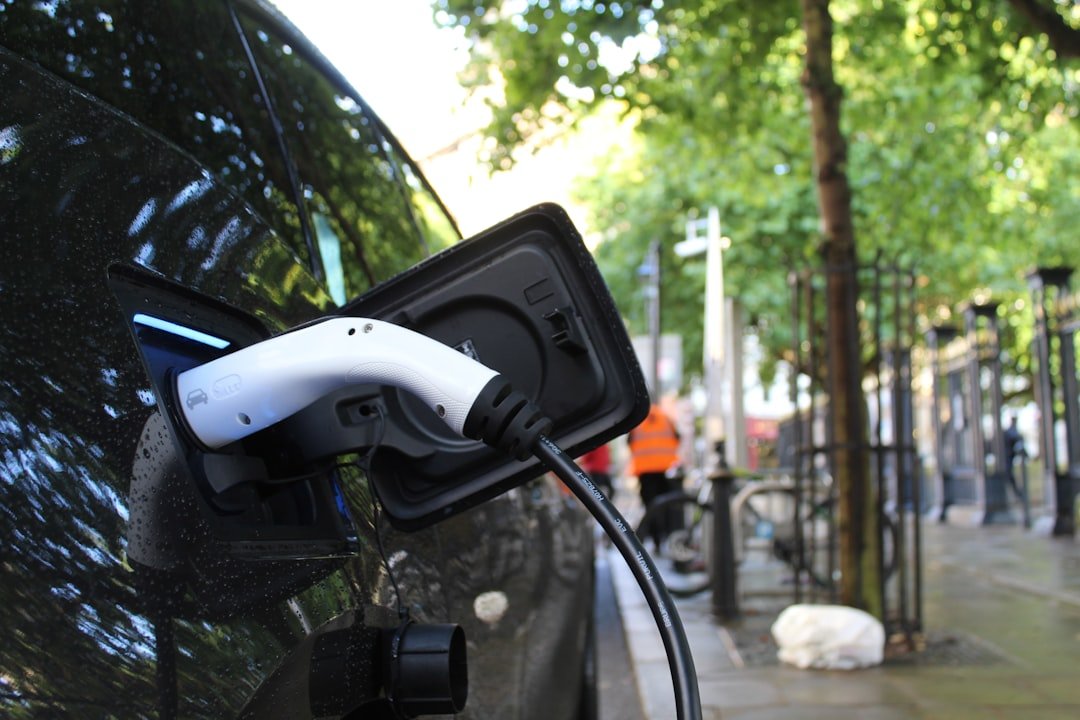
The real question isn’t whether EVs cost less to charge—they do. The question is how much does EV charging cost for your specific situation, your local electricity rates, and your driving patterns. Most owners pay between 2 and 5 dollars per 100 miles at home, but that number shifts dramatically depending on whether you’re using home charging versus public fast charging, what time of day you plug in, and which state you live in. Here’s what you actually need to know before your first charge.
Quick Comparison: Home Charging vs Public Fast Charging
| Charging Type | Cost Per kWh | Time to Full Charge | Best For | Cost Per 100 Miles |
|---|---|---|---|---|
| Home Level 2 (240V) | 0.12-0.18 per kWh avg | 6-12 hours | Daily charging, overnight | 2.50-4.50 |
| Public Level 2 (240V) | 0.20-0.30 per kWh avg | 4-8 hours | Workplace, shopping | 4.00-6.00 |
| DC Fast Charging | 0.30-0.50 per kWh avg | 20-40 minutes | Road trips, urgent top-ups | 6.00-10.00 |
| Workplace Charging | Often free or 0.05-0.10 | 4-10 hours | Commuters with access | 1.00-2.00 or free |
Most people don’t realize that how much does EV charging cost depends entirely on whether you can charge at home. If you can’t, your electricity expense climbs sharply because public networks charge premium rates and convenience fees.
Home Charging Versus Public Fast Charging: Where the Real Savings Hide
I’ve been using home charging for years, and the difference between plugging in at night and hitting a DC fast charger is staggering. Your home electricity rate—usually between 0.12 and 0.18 dollars per kilowatt-hour depending on your state—makes home charging the clear winner. You’re charging overnight when you’re not using the car anyway, so that Level 2 charger on your garage wall quietly tops up your battery for the lowest cost of any option available. Installing a dedicated 240-volt home charger costs between 500 and 2000 dollars upfront, but most owners recoup that investment in under three years through reduced charging costs alone.
Public fast charging is a different animal entirely.
DC fast chargers operate on a premium pricing model because the infrastructure costs are massive, the real estate is expensive, and you’re paying for speed and convenience. Plugging into a fast charger at a highway stop costs roughly double what you’d pay at home, sometimes triple. How much does EV charging cost on a road trip? Expect to pay 0.30 to 0.50 dollars per kilowatt-hour, plus some networks charge per-minute fees once you hit 80 percent battery capacity. That means a 250-mile charge might cost between 15 and 25 dollars compared to 5 to 8 dollars at home. The speed matters when you’re traveling, but for daily driving, it’s economically indefensible.
Before You Calculate Your Real Charging Costs: What to Check
- Verify your current home electricity rate on your latest utility bill, then add 10-15 percent because charging efficiency losses occur during the conversion process
- Check whether your state offers off-peak rates that drop significantly between 9 PM and 6 AM—some utilities save you 40-50 percent if you charge during these windows
- Research whether your employer, workplace, or nearby shopping centers offer free or subsidized Level 2 charging, because this dramatically changes your cost calculation
- Confirm your driveway can accommodate a 240-volt circuit installation—older homes sometimes need electrical panel upgrades that add 1000 to 2500 dollars to the upfront cost
- Ask your EV manufacturer about rebates, tax credits, or incentives for home charger installation in your area—some programs cover 50-75 percent of equipment costs
- Compare your daily commute distance against your EV’s rated range to see how often you genuinely need public charging versus home charging alone
How Much Does EV Charging Cost: The Real-World Math
Let’s ground this in actual numbers. Assume you drive 12,000 miles per year, your EV averages 3.5 miles per kilowatt-hour, and your home electricity rate is 0.15 dollars per kWh. You need roughly 3,430 kilowatt-hours annually. At home, that costs about 515 dollars per year. Compare that to someone who charges only at DC fast chargers paying 0.40 dollars per kWh: they’d spend nearly 1,375 dollars annually for the same distance. The difference is 860 dollars per year, or roughly 17 dollars per week—money that disappears if you don’t have access to home charging.
You’d think paying for a home charger installation is a bad investment. It usually isn’t.
Even if installation runs 1500 dollars in your area, you break even in less than two years and save thousands over the life of your EV. The payback math only fails if you move frequently, live in an apartment without dedicated parking, or drive fewer than 5000 miles per year. Most owners under age 55 who stay in their homes for three-plus years make back the investment easily. How much does EV charging cost becomes irrelevant once you realize home charging pays for itself.
Step-by-Step: Calculate Your Personal EV Charging Costs
Condition: You own an EV or plan to buy one and want to understand your actual electricity expense before committing.
Audience: Anyone aged 25-55 in the US, UK, Canada, or Australia with basic math skills and access to their utility bill.
Method: Combine your vehicle’s efficiency rating with your local electricity rates to project annual charging costs under different scenarios.
- Pull your latest utility bill and write down your electricity rate per kilowatt-hour—look for the line item labeled kWh rate or per-unit cost
- Find your EV’s efficiency rating in the owner manual or manufacturer website, listed as miles per kWh or watt-hours per mile
- Calculate your annual electricity consumption: divide your expected yearly miles by the vehicle’s miles-per-kWh rating
- Multiply that annual kWh by your local electricity rate to get your projected home charging cost, then add 12 percent for charger efficiency losses
- Call your local DC fast charger network or check their app to record the per-kWh rate at stations you’d realistically use
- Compare home charging cost to DC fast charging cost by multiplying your annual kWh by the public rate to see the difference
- Here’s where most people give up: check whether your state offers time-of-use rates that let you charge cheaper at night—this is the part that actually matters because it can cut your cost by 30-40 percent
- Reach out to your power company and ask specifically if they offer EV charging discounts or special programs; most utilities launched these programs in the last three years
- Request a quote from a licensed electrician for a 240-volt home charger installation in your area—this number changes everything about whether home charging makes financial sense for you
- Try this instead of overthinking: use your state’s EV charging cost calculator available through the Department of Energy website, which builds in local rates automatically
My Picks for This
- Tesla Model 3—Delivers 4.0-4.5 miles per kWh efficiency at home, meaning the lowest per-mile charging cost of any mainstream EV on the market right now
- Hyundai Ioniq 6—Achieves exceptional efficiency ratings that make your electricity bill smaller than nearly any competitor, saving you money on every charge whether at home or public networks
- Wallbox Pulsar Plus—Smart 240-volt home charger that schedules charging during off-peak hours automatically, lowering your how much does EV charging cost by shifting charge times to cheaper time windows
- Chargepoint Home Flex—Weatherproof Level 2 home charger with mobile app control so you can monitor real-time charging costs and adjust timing based on electricity prices
- Electrify America Membership—Annual plan option that reduces DC fast charging rates by 10-20 percent for road trips, making public fast charging less painful when you need it occasionally
Frequently Asked Questions (FAQ)
Q1. How much does EV charging cost per month for typical commuters?
Most home-charging owners pay between 40 and 70 dollars monthly if they drive 1000-1500 miles per month and charge primarily at night on residential electricity rates. If you include occasional DC fast charging on road trips, add 15-30 dollars monthly. Public-only charging users spend 80-150 dollars monthly for the same driving volume.
Q2. Is home charging worth the installation cost if I only drive 5000 miles yearly?
Probably not—installation costs between 500 and 2000 dollars, and at 5000 annual miles, you’d save only 100-150 dollars per year versus DC charging alone. You’d need 10-20 years to recoup the investment, which exceeds the practical lifespan of most home charger installations.
Q3. Do I pay the same rate for EV charging as regular household electricity?
Yes, most utilities charge the same rate for EV charging as regular electricity—it’s all billed to the same meter. However, increasing numbers of utilities offer time-of-use rates where charging between 9 PM and 6 AM costs 40-50 percent less, so ask your power company about EV-specific pricing programs.
Q4. How much does EV charging cost if I live in an apartment without dedicated parking?
You’re limited to public charging, which costs roughly 0.20-0.50 dollars per kWh depending on network and charger type. Annual costs range from 600-1500 dollars for typical driving. Some apartment complexes now install shared Level 2 chargers—ask management if they’re planning this infrastructure upgrade.
Q5. What’s the cheapest way to charge an EV long-term?
Home Level 2 charging during off-peak hours is almost always cheapest at 0.08-0.12 dollars per kWh after negotiating time-of-use rates with your utility. Install a home charger if possible, ask about off-peak discounts, and use public charging only when necessary for road trips.
Q6. Does cold weather increase how much does EV charging cost?
Cold weather doesn’t change your electricity bill directly, but it does reduce charging efficiency by 10-20 percent—meaning you need slightly more kWh to reach full charge. Your cost-per-mile climbs modestly in winter, but the effect is usually 5-10 dollars per month in northern climates.
Q7. Can I negotiate public charging rates or find discounts?
Some networks offer monthly memberships or subscription plans that reduce per-kWh rates by 10-20 percent. Electrify America, Evgo, and Tesla Supercharger networks all have membership options. Workplace charging is sometimes free or deeply subsidized, so always check with your employer first.
Related posts
This post is for informational purposes only and does not constitute professional mechanical advice, legal advice, financial advice, or insurance guidance. Automotive repairs, installations, and modifications involve inherent risks — always consult a certified mechanic or licensed professional before performing any work on your vehicle. Car prices, insurance rates, EV tax credits, product specs, and availability are subject to change without notice and may vary by location, dealership, and individual circumstances. Always verify current details directly with manufacturers, retailers, dealerships, insurance providers, and relevant government agencies before making any purchase or financial decision. Fuel economy figures, EV range estimates, and performance data referenced in this post are based on manufacturer or third-party estimates and may differ from real-world results. This site may contain affiliate links — if you purchase through our links, we may earn a commission at no additional cost to you. Product recommendations are based on general research and editorial judgment; we do not guarantee suitability for your specific vehicle, driving conditions, or personal situation. Always read product instructions, vehicle owner manuals, and safety warnings before use.