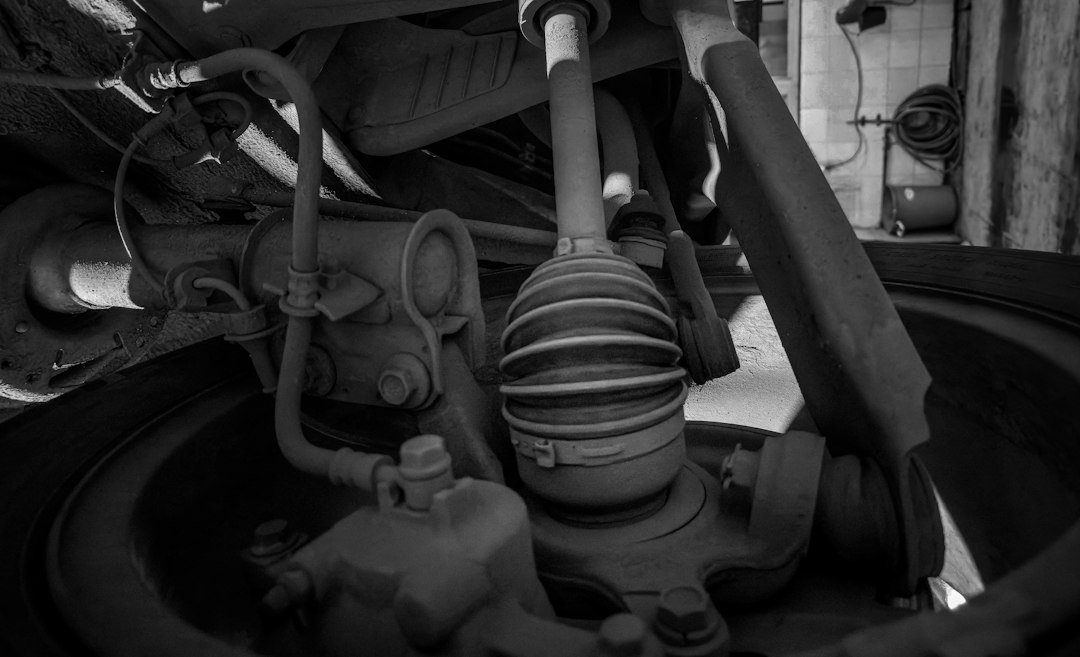
You hit a pothole on the way to work, the car bounces twice, and you wonder what is the difference between a strut and shock absorber. The short answer is simple. A shock absorber controls the up-and-down motion of the suspension, while a strut does that job and also forms a structural part of the suspension. When people ask what is the difference between a strut and shock absorber, they are usually trying to work out which part their vehicle has, why it rides poorly, or why one repair quote costs more than another.
What is the difference between a strut and shock absorber?
Both parts are commonly called shocks. That causes confusion. Their main shared job is damping, which means slowing the spring after a bump so the tire stays planted instead of bouncing down the road. Without damping, a vehicle would continue to bob long after it crossed a dip, and braking, steering response, and tire contact would all suffer.
A conventional shock absorber is usually a separate, narrow cylinder mounted between the vehicle body or frame and a suspension arm or axle. It does not normally carry the vehicle’s weight. The spring holds the vehicle up. The shock simply resists rapid compression and extension through fluid and valves inside its body.
A strut is larger because it combines several jobs into one assembly. It is structural. On many front-wheel-drive cars, a MacPherson strut bolts directly to the steering knuckle at its lower end, attaches to the body at the top, and helps keep the wheel in its intended position as the suspension moves. A coil spring often sits around the strut, although the spring, mount, bearing, boot, and bump stop are separate service parts in many designs.
| Part | Main job | Supports vehicle weight? | Typical replacement work |
|---|---|---|---|
| Shock absorber | Controls spring movement | Usually no | Remove and replace the separate damper |
| Strut | Controls movement and helps locate the wheel | Usually yes, through its spring assembly | Remove a structural suspension assembly, often followed by alignment |
How each part works over a bump
Picture a speed bump. The tire rises first, the spring compresses, and then the spring wants to push the body back upward after the tire clears the bump. That stored energy has to go somewhere. The shock or strut forces oil through carefully sized passages, which turns some of that spring motion into heat and keeps the body from oscillating.
They are not there to make a car stiff. They are there to control motion. A worn damper can leave the springs working normally while allowing too much bounce, nose dive under braking, squat during acceleration, or side-to-side body movement on uneven pavement.
Inside either unit, the design may be hydraulic, gas-charged hydraulic, or electronically controlled on some newer vehicles. The basic purpose stays the same. Gas pressure does not hold the car up in the normal sense, despite the old phrase “gas shocks”; it mainly helps reduce fluid foaming when the damper works hard.
Where you will find struts and shocks
Many passenger cars use front struts because the layout is compact and works well with front-wheel drive. Space is tight. The same car may use separate shocks in the rear, particularly where the rear suspension has separate springs and control arms.
Trucks and body-on-frame SUVs often use separate shocks at both ends, with coil springs, leaf springs, or torsion bars handling the weight. That is common, but not universal. Some SUVs and crossovers use struts up front, and certain cars use strut-like rear assemblies, so never order parts based only on vehicle type.
The easiest first check is visual. Look through the wheel opening or under the hood with the vehicle parked safely on level ground. If you see a tall tube surrounded by a coil spring and bolted near the top of the inner fender, you likely have a strut. If the coil spring sits separately and a smaller cylinder attaches nearby, it is likely a shock setup.
Do not crawl under a vehicle supported only by a jack. Use rated jack stands on solid ground. A parts catalog using the exact year, model, engine, drivetrain, and suspension option can also identify the correct setup, though a shop or dealer can confirm it if the catalog descriptions are unclear.
Why strut replacement usually costs more
Replacing a conventional shock can be fairly direct because it is not usually part of the steering or wheel-location structure. Access varies. Rusted bolts, tight rear interior trim, and air-suspension components can still make a simple-looking shock job take longer than expected.
Struts require more work because the assembly must be disconnected from the steering knuckle and removed from the body. If a technician transfers the old spring onto a new strut, that spring must be compressed with the right equipment. The spring stores serious energy. A slipping or incorrectly used spring compressor can cause major injuries, which is why many home mechanics choose a complete preassembled strut instead.
A complete assembly commonly includes a new strut, coil spring, upper mount, bearing where applicable, bump stop, and dust boot. It costs more in parts than a bare strut cartridge. It can save labor and replaces related wear items at the same time, especially on an older vehicle with a cracked mount or sagging spring.
An alignment is commonly recommended after front strut work. It is sensible. The relationship between the strut and steering knuckle can affect camber, and some vehicles use those mounting points for adjustment. Ask the shop whether alignment measurements are included, then verify the current recommendation and price for your specific vehicle.
Signs the parts may be worn
Leaking fluid is the clearest visible clue. A light film of grime on the body is not always a failed unit, but wet oil streaks around the shaft or damper body deserve closer inspection. Some units fail internally without an obvious leak.
Watch what the vehicle does. Excessive bouncing after a dip, a front end that dives hard under normal braking, wandering on rough roads, cupped tire wear, clunking over bumps, and a loose or unsettled feeling can point to worn dampers or related suspension problems. None of those symptoms proves the strut or shock is the only fault. Worn tires, sway-bar links, ball joints, control-arm bushings, wheel bearings, and alignment problems can feel similar.
The old bounce test has limits. Push down firmly on one corner, release it, and see whether the body continues to oscillate. More than one or two extra motions is suspicious. Still, stiff springs, vehicle weight, and modern suspension designs can make that driveway check misleading, so treat it as a clue rather than a diagnosis.
A practical beginner check
- Check tire condition first. Look for uneven cupping, bald patches, or different wear from side to side. Tires tell a story.
- Inspect for leaks and damage. With the wheels turned for access, look for wet damper bodies, broken springs, torn boots, or damaged upper mounts.
- Drive on a familiar route. Note whether the issue happens during braking, over sharp bumps, on highway dips, or while turning. Specific notes help.
- Compare both sides. One corner sitting lower, leaking, or bouncing more than the other gives a technician a useful starting point.
- Request an inspection before parts. Ask whether the concern is the damper itself or another suspension component, and ask if an alignment is needed after the repair.
Replace dampers in pairs on the same axle unless a manufacturer repair procedure says otherwise. Matching left and right damping helps the vehicle react consistently in turns and during braking. If one front strut is worn out at high mileage, its partner has usually lived through the same roads and weather.
Do not confuse struts with coilovers
A coilover is a broad term for a coil spring mounted around a damper. It does not automatically mean a performance part. Many factory strut assemblies are effectively coilover-style units, while aftermarket adjustable coilovers often change ride height and damping settings.
Air springs are different again. They support vehicle weight with pressurized air, but the vehicle may still use separate shocks or struts to control movement. The names overlap in casual conversation. The mounting design is what matters when you are diagnosing a problem or ordering parts.
For beginners, the useful takeaway is this: springs carry the weight, while shocks and struts control the bounce. A strut also does structural suspension work. Check the actual layout on your vehicle before buying anything, and have a qualified shop inspect unusual tire wear, steering pull, loud suspension noises, or a vehicle that feels unstable during braking.
Related posts
This article is for general informational purposes only and is not mechanical, legal, financial, or insurance advice. Prices, insurance rates, tax credits, and manufacturer-stated fuel economy or EV range are estimates that change over time and vary by vehicle, region, and provider — always verify current figures with a dealer, mechanic, insurer, or official source before making a decision.
Disclosure: This post may contain affiliate links. If you click through and make a purchase, we may earn a commission at no extra cost to you. We only recommend products we’ve researched or genuinely believe in.