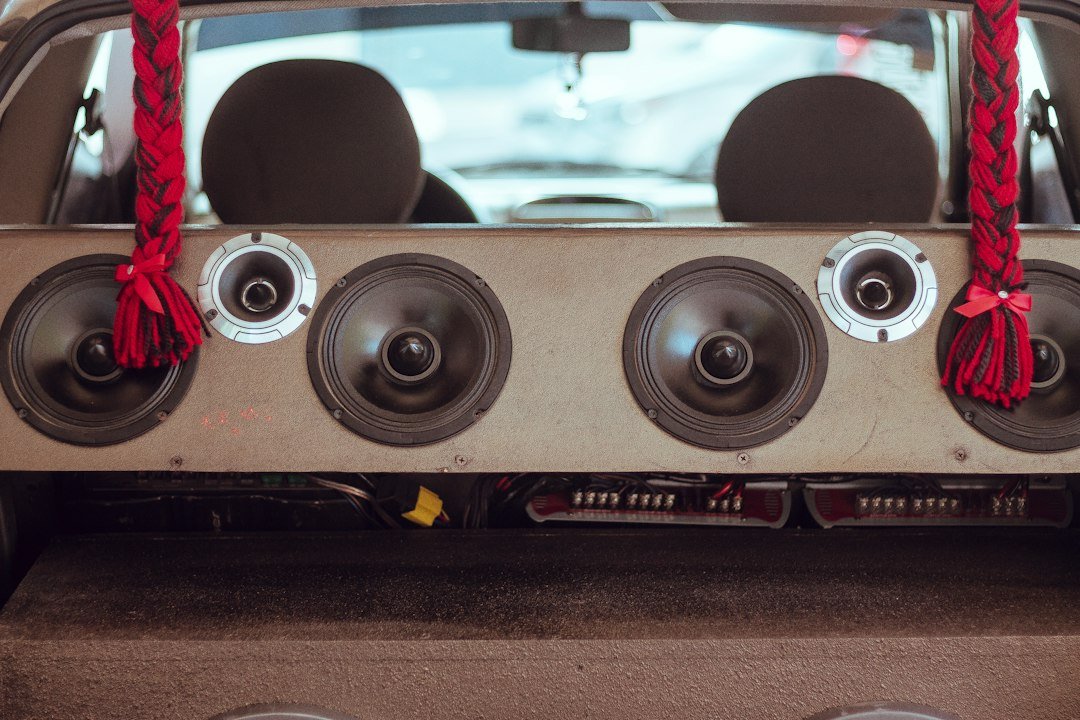
You have groceries in the trunk, a stroller or work bag behind them, and your factory speakers sound thin on the drive home. The best subwoofer for car audio in that situation is usually a compact powered enclosure or shallow-mounted subwoofer, not the biggest box that will physically fit. Space matters. The best subwoofer for car audio for small trunk spaces needs to add low-end weight without turning a hatchback, sedan, or compact SUV into a one-purpose bass container.
Start with the enclosure, because the enclosure decides the real-world result more than a big peak-watt number printed on a box. A properly sized 8-inch or 10-inch sub in a good sealed enclosure can sound tighter, use less space, and be easier to live with than a poorly matched 12-inch ported setup. Bigger is not automatic. Your music choice, available mounting space, and willingness to give up cargo capacity should guide the purchase.
Best subwoofer for car audio when trunk space is limited
For most small trunks, the sensible short list has three layouts: a powered compact enclosure, a shallow subwoofer in a custom or slim box, or a spare-tire-well subwoofer. Each has a different compromise. A compact powered unit combines the amp and subwoofer in one enclosure, which reduces wiring complexity and keeps the footprint manageable, while a shallow separate sub gives you more control over the final system if you have room for an external amplifier.
A powered enclosure is often the easiest route for a daily driver. Units such as the Rockford Fosgate Punch P300-10, Kicker Hideaway models, Alpine compact powered subs, and Pioneer powered enclosures are commonly researched options in this category, though their dimensions, power ratings, and local availability vary by model year and market. Measure first. Some are small enough to sit against a trunk side or rear seat, but even a compact box can interfere with a hatch opening, folding seat release, or emergency gear.
A shallow 10-inch subwoofer is a good middle ground when you want more output than many under-seat units can provide. Shallow lines from well-known makers such as JL Audio, Kicker, Alpine, Rockford Fosgate, and Pioneer are often used in slim sealed boxes behind a sedan rear seat or against an SUV cargo-wall panel. The driver may be thin. The enclosure still needs air space, mounting depth, and clearance for the cone to move.
Spare-tire-well subwoofers preserve the flat load floor, which makes them appealing in hatchbacks and compact crossovers. They can be tidy. The downside is that output is usually moderate, access to the spare wheel may be less convenient, and fitment depends heavily on the vehicle’s wheel well, factory foam inserts, and tire-repair equipment. Check the vehicle-specific instructions before ordering, especially if your car has a factory subwoofer or storage tray in that area.
Choose the enclosure before the speaker size
Sealed enclosures are usually the best match for constrained cargo areas. They are compact, tend to have controlled bass, and are more forgiving when the available box volume is limited. They need power. A sealed 10-inch setup may need a stronger amplifier than a ported equivalent to reach the same loudness, but it usually takes less physical room and can suit rock, acoustic music, pop, and mixed daily listening well.
Ported enclosures can play louder around their tuning frequency, which suits listeners who want stronger deep-bass impact from hip-hop, electronic music, or bass-heavy modern pop. The penalty is size. A ported 10-inch box can occupy as much trunk room as a larger sealed setup, and a badly designed small ported enclosure may sound boomy, lose control below tuning, or put excess strain on the woofer.
Powered under-seat subwoofers deserve realistic expectations. They can fill in missing bass and make factory systems sound more complete, particularly in small cars with limited trunk access. They do not replace a proper enclosed 10-inch sub for low-frequency output. If you want bass you can clearly feel through the seat at highway speed, an under-seat unit may disappoint unless your expectations are modest.
Match power ratings without chasing marketing numbers
Use RMS power, not maximum or peak power, when matching the amp and subwoofer. RMS is the more useful continuous-power rating for comparing equipment, although manufacturers measure and state ratings differently. Read the manual. A sub rated around 250 watts RMS generally pairs sensibly with an amplifier that can provide roughly that amount at the final wired impedance, assuming the enclosure and gain settings are correct.
Impedance is where many first-time purchases go sideways. A dual-voice-coil subwoofer can often be wired in more than one configuration, while a monoblock amplifier has its own minimum safe impedance. For example, two 4-ohm voice coils may be wired to present either 2 ohms or 8 ohms, depending on the wiring method. Do not guess. Confirm the subwoofer wiring options and the amplifier’s stable impedance in their official manuals before buying either part.
A powered enclosure avoids much of that matching work because its amplifier and driver are selected as a package. That does not mean every powered unit has the same output or sound quality. Look for a published RMS rating, a built-in low-pass crossover, a remote level control if you want on-the-fly adjustment, and high-level inputs if the factory radio has no RCA outputs.
Measure the trunk like the installation depends on it
It does. Trunk spec sheets can be misleading because they rarely account for hinge arms, sloping rear glass, wheel-well intrusions, seatback braces, or the path needed to load a suitcase. Cardboard helps. Make a simple mock-up with the stated enclosure dimensions, then set it where you plan to install the subwoofer and open the trunk or hatch fully.
- Measure the floor footprint. Record width, depth, and the narrowest point between wheel wells. Keep the tape measure level.
- Measure height clearance. Check below the parcel shelf, hatch glass, cargo cover, or trunk lid structure. Leave room around the grille.
- Check the loading path. A box may fit once inside but may not pass through the trunk opening at the angle required. This catches expensive mistakes.
- Plan cable routing. Identify a safe route for power cable, signal cable, ground wire, and a fuse holder near the battery. Keep signal wiring away from power wiring where practical.
- Secure the enclosure. A loose subwoofer box becomes dangerous in a hard stop or collision. Use vehicle-appropriate tie-down points or a secure mounting method.
Leave ventilation space around a powered enclosure’s amplifier panel. Heat is real. Do not bury the amp side under blankets, cargo mats, or shopping bags, and avoid mounting where water can collect after wet gear or a leaking hatch seal. A compact installation that overheats is not a good installation.
What sound level fits a small daily driver
Think in terms of bass goals rather than speaker diameter alone. If you mainly want kick drums, bass guitar, and low notes that factory speakers miss, a compact 8-inch or 10-inch powered enclosure may be enough. Start there. It takes little cargo room and usually integrates more easily with stock speakers than a large high-output system.
If you want a noticeable upgrade with stronger low bass, a sealed shallow 10-inch sub and an external amplifier are often the practical sweet spot. This takes more planning, because you need an amp location, wiring kit, enclosure design, and potentially a line output converter or integration device for the factory system. The payoff can be substantial. It also costs more than dropping a powered box into the trunk.
If maximum volume is the goal, small trunk space and that goal are working against each other. A ported enclosure, larger amplifier, upgraded electrical wiring, and serious cargo sacrifice may be required. Keep it realistic. Factory charging systems can handle many moderate installations, but higher-power systems may need electrical upgrades depending on the vehicle and total demand, so verify the plan with a reputable car-audio installer.
Don’t skip integration and installation parts
A great subwoofer can still sound bad if its signal is poor or its settings are wrong. Factory head units may need high-level inputs, a line output converter, or a vehicle-specific audio interface. Some newer vehicles have active noise cancellation that can react badly to added bass. Check this first. A shop familiar with your model can confirm whether that system needs to be disabled or retained.
Budget for the parts around the subwoofer. A proper power cable, ground cable, inline fuse, fuse holder, signal connection, speaker wire, mounting hardware, and enclosure protection can add meaningful cost beyond the advertised sub price. Avoid ultra-cheap wiring kits with vague specifications. Cable size must suit the amplifier’s fuse rating, run length, and manufacturer guidance.
Set the low-pass filter conservatively at first, often somewhere around 70 to 90 Hz depending on the factory speakers and crossover options. Then listen. If you can easily locate bass vocals or upper notes in the trunk, the crossover may be too high; if the front speakers sound strained and the sub seems absent, the crossover or level may be too low. Use test tracks you know well, not one bass-heavy demo song.
FAQ
Is an 8-inch subwoofer enough for a small trunk?
An 8-inch subwoofer can be enough when the goal is fuller, cleaner bass rather than high volume. It is often a sensible fit. Enclosure design and amplifier power matter more than the diameter alone, so compare published enclosure requirements and RMS ratings before assuming a 10-inch option is always better.
Is a powered subwoofer better for small trunk spaces?
A powered subwoofer is often better when installation space and budget are limited because the amplifier is built into the enclosure. It simplifies the package. A separate sub and amp can offer more flexibility and output, but it usually requires more room, wiring, and setup work.
Can I put a subwoofer against the rear seat?
Usually, yes, if the enclosure is secure and the speaker has adequate clearance. Check seat folding. Avoid blocking seat releases, child-seat access points, trunk emergency releases, or factory service panels, and make sure the subwoofer grille will not be struck by loose cargo.
Do I need an amplifier for a car subwoofer?
Yes, a conventional passive subwoofer needs an external amplifier. A powered subwoofer already has one inside the enclosure. Verify the amp’s RMS output and impedance compatibility before connecting a passive sub, because a mismatch can cause distortion, shutdowns, or equipment damage.
What is the simplest small-trunk subwoofer setup?
A compact powered 8-inch or 10-inch sealed enclosure with high-level inputs is usually the simplest route for a factory-radio vehicle. Keep the system modest. Have the power wire fused close to the battery, secure the enclosure properly, and ask an installer to verify the integration plan if your vehicle has amplified factory audio or noise cancellation.
Related posts
This article is for general informational purposes only and is not mechanical, legal, financial, or insurance advice. Prices, insurance rates, tax credits, and manufacturer-stated fuel economy or EV range are estimates that change over time and vary by vehicle, region, and provider — always verify current figures with a dealer, mechanic, insurer, or official source before making a decision.
Disclosure: This post may contain affiliate links. If you click through and make a purchase, we may earn a commission at no extra cost to you. We only recommend products we’ve researched or genuinely believe in.