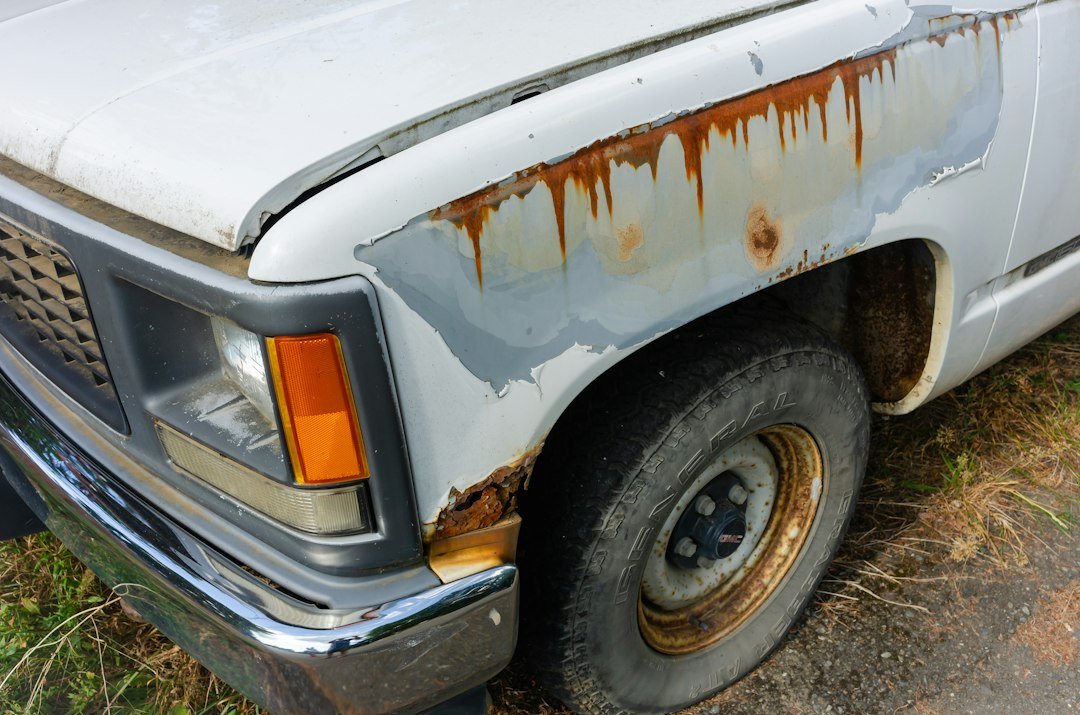
Before purchase, the best way to learn how to check a truck frame for rust damage is to see the whole underside on a proper vehicle lift, where dirt, undercoating, brake lines, crossmembers, and every suspension mounting point are visible. Do not rely on driveway photos. A flashlight inspection while the truck sits on the ground can reveal obvious rot, but it misses the inside edges of frame rails and the upper surfaces where mud and salted water often sit for years.
Bring a bright LED flashlight, work gloves, a small inspection mirror, a plastic scraper, and a phone for photos. Keep it simple. A seller who is confident in the truck should usually allow a reasonable underbody inspection, though a dealer or private seller may have rules about using their lift or touching components.
Never crawl below a truck supported only by a jack. That is not a gamble worth taking. Use a shop lift, or have a shop place the truck on correctly rated jack stands at the proper support points if a lift is unavailable.
How to check a truck frame for rust damage before purchase
Start with the frame rails, then work outward to crossmembers, brackets, suspension mounts, and body mounts. Move slowly. A truck can look clean at first glance because fresh black coating hides a rough surface, especially on vehicles traded in after winter use or brought in from a different climate.
Look along both sides of each rail from front to rear, using the flashlight at a low angle instead of aiming it straight at the metal. Side lighting tells the story. It makes flaky scale, swollen seams, uneven patches, and deep pits stand out much better than flat overhead light.
On an open C-channel frame, inspect the inside face as carefully as the outside face because debris commonly packs into the lower channel. On a boxed frame, use factory holes, drain openings, and accessible gaps to inspect the interior with a mirror or phone camera. Rust can begin inside a boxed rail and work outward, so an intact exterior does not always settle the question.
Do not confuse ordinary surface oxidation with serious section loss. Surface rust usually looks orange or brown, remains fairly smooth, and does not change the metal shape. It is common. A wire brush may remove the discoloration and expose sound steel underneath.
Scale is different. It comes off in layered flakes, often leaving a rough cratered surface below. Deep pitting matters because it removes metal thickness, and a frame can retain a dark painted appearance while the steel under that coating has become thin.
Perforation is the clear walk-away sign for most buyers. If you find holes in a main frame rail, cracks near a mounting point, loose rust flakes falling from a boxed rail, or metal that flexes when gently probed, treat the truck as a major repair project rather than a normal used-truck purchase.
Use a plastic scraper or a small blunt pick carefully on questionable areas. Be gentle. You are trying to remove loose dirt and flaky coating, not punch through metal or damage a seller’s truck. Sound steel feels solid under light pressure; rotten scale can crumble away and reveal a cavity.
Where truck frames usually rust first
The worst corrosion is rarely spread evenly across the truck. It collects where moisture, road salt, sand, and packed mud stay trapped. Those spots deserve most of your inspection time, even if the visible outer rails look decent.
- Rear frame rails: Check above and behind the rear axle, especially around spring hangers, shock mounts, bed supports, and the bumper area. This is a common salt trap.
- Front suspension mounts: Inspect control-arm pockets, steering-box areas, front crossmembers, and coil or leaf-spring mounts. A solid-looking rail is less reassuring if the bracket welded to it is badly weakened.
- Leaf-spring hangers and shackles: These carry heavy loads and see constant movement. Look for cracked welds, expanded bolt holes, splitting layers of metal, or rust behind the bracket.
- Cab and body mounts: Examine the frame brackets and the body structure around each mount. Rust there can cause sagging, misaligned panels, or difficult repairs.
- Fuel tank and spare tire area: Road grime accumulates here. Check frame sections hidden by tank straps, shields, brackets, and the spare-tire carrier.
- Crossmembers: Inspect both their ends and where they join the rails. Water can sit on top of crossmembers, where you may need a mirror to see it.
Pay special attention to welded brackets. That is critical. Rust can form between overlapping pieces of steel, pushing them apart and making a mount look thicker or swollen around its edges. A rust bubble beside a spring hanger is more concerning than a similar patch on a non-structural heat shield.
Some trucks have well-known corrosion-prone areas, but the exact trouble spots depend on the model year, frame design, climate history, and whether the truck hauled through mud or salted roads. Check owner forums only as a clue. Verify what you see on the actual vehicle instead of assuming every truck of a certain model has the same problem.
Watch for repairs, coatings, and cover-ups
Fresh undercoating is not automatically bad. Many careful owners apply rust protection as preventive maintenance. The question is whether the coating was applied over clean, prepared metal or sprayed thickly over loose scale to make the underside look better for a sale.
Look for overspray on brake lines, wiring, rubber bushings, exhaust parts, and suspension hardware. That can suggest a quick cosmetic job. Also compare texture across the frame: a smooth, thin protective coating is different from thick black material that fills drain holes, covers flaky edges, and has no obvious preparation beneath it.
Tap suspicious metal lightly with the handle of a small tool, not a heavy hammer. Listen carefully. Healthy steel generally gives a firmer sound, while heavily scaled areas can sound dull or shed flakes, although sound alone cannot tell you the remaining thickness of a frame rail.
Be cautious around welded patches. A professionally documented repair may be acceptable to some buyers, depending on the location and local inspection rules, but a rough plate welded over rust can hide worse deterioration beneath it. Any repair near steering, suspension, spring mounts, or a major frame bend deserves an independent inspection before money changes hands.
Check for strange seams and mismatched paint. A frame section that is much cleaner than the rest, has uneven weld beads, or carries a different undercoating texture may simply have been repaired after damage. It may also point to crash work. Ask directly what happened and request invoices if the seller has them.
Separate frame rust from other underbody rust
Not every rusty part under a truck has the same risk or repair cost. Exhaust pipes, skid plates, heat shields, and bolt heads often rust heavily long before the frame has meaningful damage. That is normal in many winter-road regions.
Brake lines deserve attention anyway. A rusty frame is one concern, but corroded steel brake or fuel lines can create their own safety and repair problems. Follow the lines where possible, particularly near clips, the fuel tank, and the rear axle, and ask a shop to inspect anything hidden behind shields.
Inspect the cab corners, rocker panels, bed floor supports, wheel arches, and floor pans too. Rust often travels in company. A clean frame under a truck with badly perforated body mounts or rotted rocker structure is not necessarily a good buy.
Look at bolts and fasteners as a clue, not a verdict. If every bolt, clip, and bracket is deeply corroded, assume the frame has had the same exposure and inspect closer. Conversely, clean hardware does not prove a clean frame because parts may have been replaced or coated.
Use the road test as supporting evidence
Drive the truck before making a decision. A road test will not diagnose hidden frame rust, but it can expose symptoms that match a damaged or poorly repaired chassis. Keep the radio off for part of the drive.
Notice whether the truck tracks straight on a level road, returns normally after turns, and stays settled over bumps. Watch for clunks. Pulling, wandering, uneven tire wear, a crooked steering wheel, or repeated suspension noises can come from many causes, including alignment, worn parts, tire issues, or frame damage.
Open and close the doors and tailgate on level ground. If a door binds badly, gaps are visibly uneven, or the bed and cab appear misaligned, inspect the structure more closely. Those signs do not prove frame failure, but they justify questions about collision history, heavy use, and prior repairs.
Set a practical buying threshold
For a normal daily driver or work truck, light surface rust with solid metal underneath is usually manageable if the price and overall condition make sense. Get it treated soon. Cleaning loose rust, applying an appropriate rust inhibitor, and keeping drain areas clear can slow further deterioration, but no coating restores steel that has already rusted away.
Deep scaling needs a closer call. If the scale is limited to a removable crossmember, a shield, or a replaceable bracket, the repair may be reasonable. If it affects main rails or load-bearing suspension mounts, the risk climbs quickly because repair access, welding quality, alignment, inspection requirements, and future corrosion all matter.
A simple decision rule helps: buy only when you can identify the rust, understand the repair scope, and have enough price room for a professional inspection and the likely work. Walk away when the seller will not permit an underbody inspection, the frame has holes or structural cracks, or the damage is hidden under heavy fresh coating.
Ask a trusted truck shop for a pre-purchase inspection if you are unsure. Spend the money. An inspection charge is generally small compared with buying a truck that later needs major frame work, a suspension rebuild, brake lines, or a failed safety inspection.
Document what you find
Take clear photos of each questionable area, including one wide photo that shows its location and one close photo that shows the metal condition. Photos help. They also give a shop something useful to review if you cannot bring the truck in immediately.
Ask the seller where the truck spent most of its life, whether it was used near salted winter roads or coastal areas, and whether it has received rustproofing or frame repairs. Check maintenance records. A specific answer with dated invoices is more useful than a vague claim that the truck was always cared for.
Finally, compare the asking price with cleaner examples in your area after allowing for inspection and repair costs. Prices vary by region. A cheap truck with a compromised frame is often expensive in the long run, while a truck with mild, honestly disclosed surface rust can be a sensible purchase if the structure checks out.
Related posts
This article is for general informational purposes only and is not mechanical, legal, financial, or insurance advice. Prices, insurance rates, tax credits, and manufacturer-stated fuel economy or EV range are estimates that change over time and vary by vehicle, region, and provider — always verify current figures with a dealer, mechanic, insurer, or official source before making a decision.
Disclosure: This post may contain affiliate links. If you click through and make a purchase, we may earn a commission at no extra cost to you. We only recommend products we’ve researched or genuinely believe in.