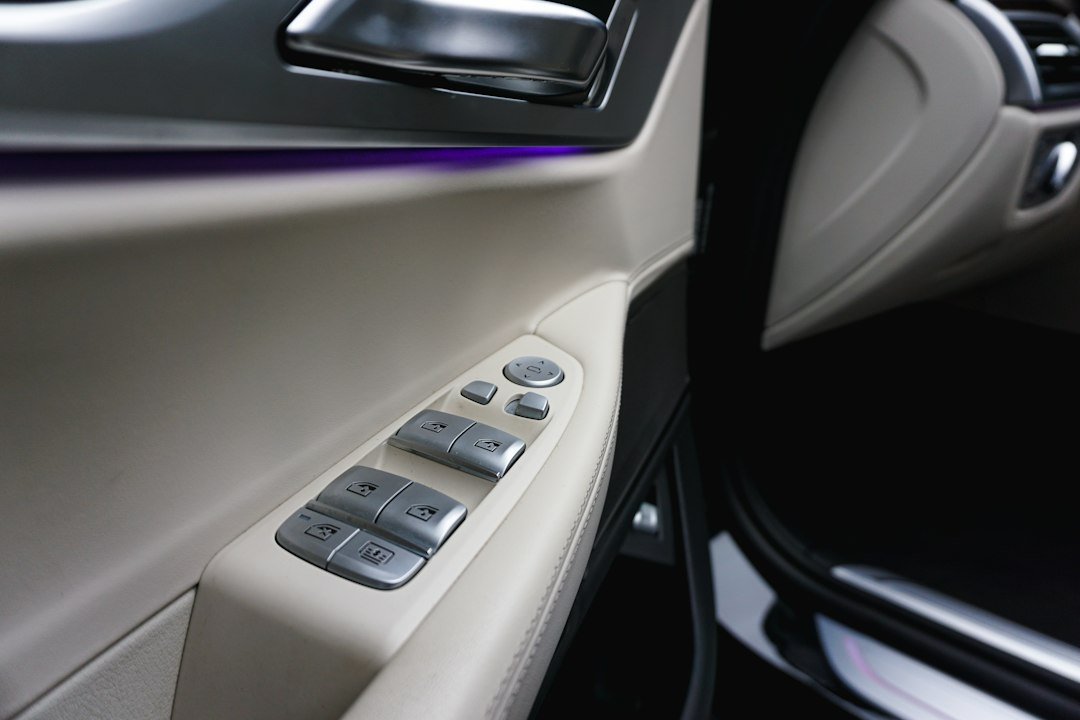
A common misconception about how to fix power windows that won’t go up is that the window motor is always dead. Often, the fault is a blown fuse, worn switch, broken wire in the door jamb, or glass that is binding in its track. Start simple. Replacing a motor before checking those basics can mean buying parts you did not need.
First, notice whether one window has failed or every power window is affected. That pattern matters. One dead window usually points to that door’s switch, wiring, regulator, motor, or glass tracks, while several dead windows make a shared fuse, relay, control module, master switch, or low battery voltage more likely. Some vehicles also disable rear-window switches with a lockout button on the driver’s door. Check that button first.
Work carefully around door panels. Many modern doors contain side-impact airbags, and the battery should be disconnected before unplugging airbag-related wiring or probing unknown connectors. Wait a few minutes after disconnecting it. If the glass is loose or partly down, tape it securely to the door frame with wide painter’s tape before removing the panel.
How to fix power windows that won’t go up step by step
Use the easiest tests first, then move toward the door panel and regulator. A window that moves slowly, groans, or needs help by hand often has a failing regulator or dirty, dry tracks. Do not force it. Pushing hard on the glass can crack it or bend a regulator cable.
- Check the ignition position and window lockout. Most vehicles require the key in accessory or run mode. Turn the rear-window lockout button off, then try the affected window from both its own switch and the driver’s master switch.
- Listen at the door. Hold the switch in the up position and listen closely. A click or motor hum with no glass movement usually means the motor has power but the regulator, cable, clips, or glass track has failed. Silence points more toward a fuse, switch, wiring, or motor circuit problem.
- Inspect the fuses. Use the owner’s manual or fuse-box cover to find the power-window fuse and any body-control fuse. Pull the fuse and inspect the metal strip, or test it with a multimeter. Replace it only with the same amperage rating. Never install a larger fuse.
- Try another switch. If the driver’s master switch raises the window but the door switch does not, the local switch is a strong suspect. If the local switch works but the master does not, inspect the master switch assembly and its connector.
- Check the door-jamb wiring. Open the door and inspect the rubber wiring boot between the body and door. Repeated opening can break wires inside, especially on older vehicles. A window that works only when the door is partly open is a useful clue.
If the window suddenly went down and will not return, avoid leaving the vehicle exposed overnight if possible. Cover the opening with plastic and tape it around the frame, not directly onto weatherstripping or painted edges for long periods. Keep the interior dry. Then diagnose it in daylight.
Check the switch, fuse, and wiring
A basic digital multimeter is more useful than guessing. With the door panel removed and the window switch connected, test for voltage at the motor connector while holding the switch up. Use the vehicle wiring diagram if available, since connector layouts vary. Be precise.
A typical two-wire window motor reverses direction when the switch reverses polarity. If the meter shows battery voltage across the motor connector while the switch is held up, but the motor stays silent or cannot move the glass, the motor or regulator assembly is likely at fault. If there is no voltage, trace backward through the switch, connector, fuse, and wiring. Do not short terminals with a screwdriver.
- A blown fuse that fails again quickly can indicate a shorted wire, seized motor, or jammed regulator. Find the cause before fitting another fuse.
- Green corrosion in a switch connector can interrupt current. Disconnect the battery first, then inspect the terminals for moisture, bent pins, or loose fitment.
- A switch may fail in only one direction. A window that goes down but not up often has worn contacts in the up side of the switch, though wiring and the motor still need checking.
If every window is dead, check battery condition and the main power-window fuse before pulling apart any door. Low voltage can cause strange body-electrical behavior. A vehicle-specific wiring diagram may also show a relay or body-control module in the circuit.
Inspect the regulator and glass tracks
When power reaches the motor, remove the trim panel and moisture barrier carefully. The barrier needs to go back in place. Water that gets past it can soak the door card, corrode connectors, and cause repeat electrical trouble.
Look for a frayed cable, broken plastic slider, bent regulator arm, loose glass clamp, or glass that has slipped outside its channel. Cable-style regulators commonly fail with a tangled cable inside the drum. Scissor regulators can develop worn pivots or cracked arms. Either failure can leave the glass tilted or stuck.
Inspect the felt-lined run channels along both sides of the glass. Dirt, hardened rubber, or damaged channel material can make the motor work far harder than it should. Clean loose debris with a dry cloth, then use a small amount of silicone-safe rubber lubricant on the run channels if the product instructions allow it. Avoid heavy grease. Grease collects grit and can make the problem worse.
With the regulator exposed, support the glass before loosening any clamp bolts. A helper makes this safer. If the motor runs but the cable is broken or the regulator arms are damaged, replacing the regulator assembly is usually more practical than rebuilding individual pieces. Some cars sell the motor separately, while others package it with the regulator. Verify the part by VIN with a dealer or parts supplier.
Make the repair and test it properly
Before reinstalling the door panel, reconnect the switch and test the window through several full cycles. Keep fingers clear. Watch the glass for a smooth, level climb and listen for clicking, scraping, or cable noise. If the glass tilts, stop and realign the regulator or run channel before forcing the switch.
- Position the glass evenly in both run channels.
- Tighten glass-clamp and regulator fasteners to the vehicle maker’s specified torque.
- Reconnect the moisture barrier so it seals around the door openings.
- Test the window before refitting every trim clip and screw.
- Reinitialize the auto-up function if it no longer works after battery disconnection or repair.
Many vehicles relearn auto-up by holding the switch down until the glass is fully open, then holding it up for several seconds after it closes. The exact procedure varies. Check the owner’s manual or service information for your model, especially if the window reverses during auto-up.
When a shop is the sensible choice
A DIY repair is reasonable when the fault is an accessible fuse, switch, connector, or bolt-on regulator. Stop if the vehicle has an airbag connector in the work area, unfamiliar module wiring, shattered glass, or a window that repeatedly blows fuses. Those faults can take more diagnosis than the part itself.
Ask a shop to diagnose the circuit before authorizing a regulator or motor. Labor and parts prices vary by vehicle and region. A clear symptom description helps: say whether the window makes noise, works from one switch only, changes with door position, or stopped after rain. Those details can save time.
Frequently asked questions
Can I push a power window up by hand?
Sometimes, but it depends on the failed part. If the regulator cable has snapped, the glass may move freely enough to lift while someone holds the switch, but forcing it can crack the glass or damage the track. Use tape to secure it once closed.
Why does my window go down but not up?
A worn switch contact is a common cause because the up and down circuits can fail separately. Broken door-jamb wiring, a weak motor, and a binding regulator can produce the same symptom. Test for voltage at the motor connector before buying a switch.
Why does the power window work intermittently?
Intermittent operation often points to a loose connector, cracked wire in the door boot, worn switch contacts, or a motor with worn internal brushes. Door movement is a clue. If it works when you open or close the door, inspect the harness first.
Can a bad window regulator damage the motor?
Yes, a binding or broken regulator can make the motor work under excessive load. The motor may overheat, trip internal protection, or eventually fail. Do not keep holding the switch if the window is stalled or making harsh cable noise.
Related posts
This article is for general informational purposes only and is not mechanical, legal, financial, or insurance advice. Prices, insurance rates, tax credits, and manufacturer-stated fuel economy or EV range are estimates that change over time and vary by vehicle, region, and provider — always verify current figures with a dealer, mechanic, insurer, or official source before making a decision.
Disclosure: This post may contain affiliate links. If you click through and make a purchase, we may earn a commission at no extra cost to you. We only recommend products we’ve researched or genuinely believe in.