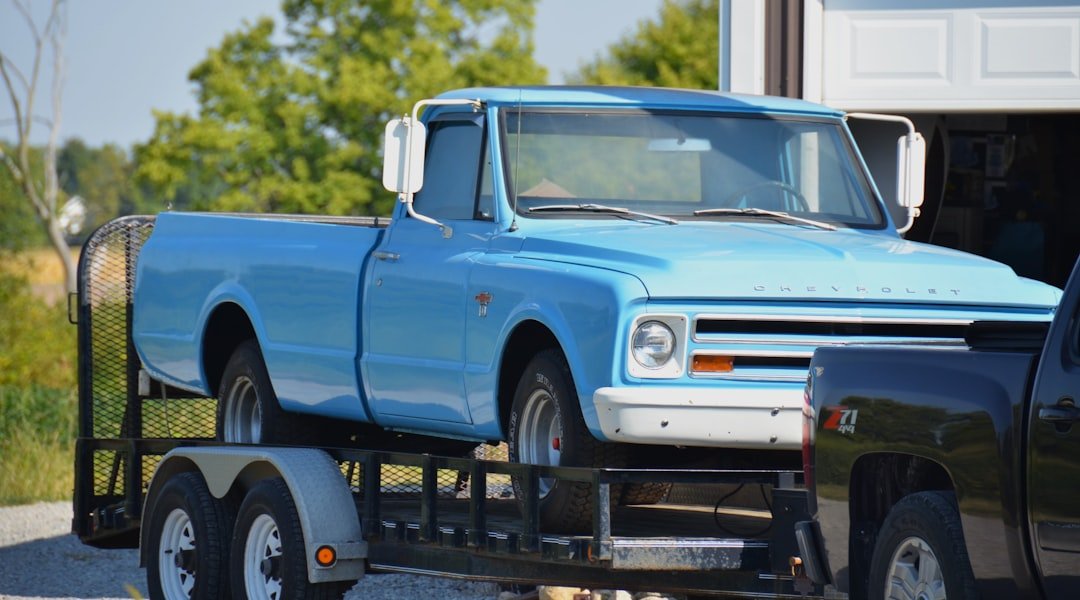
It is Friday afternoon, the boat is loaded, the family wants to leave, and the truck squats harder than expected when the trailer drops onto the hitch. Is the Ford F150 good for towing? Yes, it can be an excellent tow vehicle, but the useful answer depends on the exact F-150, the trailer’s loaded weight, and how much weight is in the cab and bed. A properly matched F-150 can handle a work trailer, travel trailer, camper, or boat with little drama. An improperly matched one can run out of payload long before it reaches its advertised towing maximum.
Is the Ford F150 good for towing?
For most owners, yes. The F-150 has a wide spread of available engines, wheelbases, axle ratios, suspension packages, and factory towing equipment. That range is why one F-150 may be comfortable towing a medium-size camper while another is better suited to occasional utility-trailer duty.
Ford has offered conventional towing ratings that reach roughly 13,000 pounds or more on certain properly equipped recent F-150 configurations. Those numbers apply to a specific truck with the correct engine, cab, bed length, axle ratio, cooling equipment, hitch equipment, and trailer setup. They are not a blanket rating for every F-150 on a dealer lot.
The truck itself is generally a solid towing platform. Full-size width helps stability. Longer-wheelbase versions tend to feel calmer with a longer trailer. Available trailer brake control, tow/haul programming, towing mirrors, backup camera views, and integrated trailer-assist tools can make repeated hookups and tight campsites less stressful. Still, hardware does not override weight limits. The door sticker and owner’s manual decide what your individual truck can carry.
If your trailer is a 4,000- to 7,000-pound loaded boat, enclosed trailer, or travel trailer, many F-150 configurations can be sensible choices. If you are looking at a large bunkhouse camper, horse trailer, or enclosed car hauler, the payload calculation becomes the first thing to check. That is where buyers get caught.
Payload and towing capacity explained
Towing capacity is the maximum trailer weight the manufacturer allows for a particular truck setup. Payload is the maximum weight carried by the truck itself. Payload includes passengers, pets, tools, a bed cover, recovery gear, cargo in the bed, an aftermarket hitch, and the trailer’s tongue weight.
Trailer tongue weight is the downward force the trailer applies to the hitch. For a conventional bumper-pull trailer, a common planning range is about 10 to 15 percent of loaded trailer weight. A 7,000-pound travel trailer may therefore put roughly 700 to 1,050 pounds on the truck before anyone climbs into the cab. A weight-distribution hitch can improve handling and distribute some load across the truck and trailer axles, but it does not erase that weight from the truck’s payload calculation.
That distinction matters. A truck could have enough tow rating for a 9,000-pound trailer yet lack enough payload for the trailer’s hitch weight, two adults, two children, a dog, a cooler, and camping gear. The trailer may be within one limit while the truck is over another.
The most useful number is usually on the yellow-and-white tire and loading label on the driver-side door jamb. It states the maximum combined weight of occupants and cargo for that truck as built. Do not rely only on an online listing or a brochure. Adding options changes payload. A luxury cab, panoramic roof, four-wheel drive, larger wheels, heavier engine, and factory accessories can all reduce the available amount.
Start with the payload sticker, then subtract real-world weight:
- All passengers and pets.
- Anything carried in the bed or cab.
- Aftermarket equipment such as a topper, toolbox, or auxiliary fuel setup.
- The loaded tongue weight of the trailer.
- The hitch itself, including weight-distribution hardware if used.
The remainder is your margin. A little margin is better than landing exactly on the sticker number, because people often estimate cargo and tongue weight too generously. Public scales provide a far clearer answer than guesswork.
Why the maximum tow rating is easy to misunderstand
Maximum towing claims are useful for comparing broad capability, but they are a poor shopping shortcut. The highest-rated F-150 is often a particular two-wheel-drive or four-wheel-drive configuration with an available towing package and a specific axle ratio. A different cab or bed can have a lower rating. So can a different engine.
Cab choice matters because bigger cabs weigh more and invite more passengers. Bed choice matters because a longer wheelbase can help stability, while the bed and frame combination may change ratings. Four-wheel drive adds useful traction at boat ramps, muddy job sites, and snowy roads, but it can reduce payload compared with a similar two-wheel-drive truck. None of that makes one version bad. It just changes the job it suits.
Engine choice also changes the experience. A turbocharged EcoBoost V6 usually makes strong low-rpm torque and can pull a trailer confidently without needing high revs all the time. The 5.0-liter V8 has a more traditional response and sound that many truck buyers prefer. Hybrid versions can offer useful low-end torque and onboard-power capability, though their payload rating still needs a close look. Verify the rating for the exact model year and configuration with Ford’s towing guide or the dealer’s specification sheet.
Diesel-like fuel economy should not be assumed from any gasoline F-150 while towing. Trailer weight, speed, headwinds, elevation, tire pressure, terrain, and driver inputs can move fuel use sharply. A truck that feels easy around town may work hard pulling a tall camper into a crosswind.
Match the truck to the trailer you use loaded
Use the trailer’s loaded weight, not its dry weight. Dry weight commonly excludes water, propane, batteries, dealer-installed options, food, clothing, tools, and camping supplies. It is fine as a starting point, but it is not the number that matters on the road.
For a travel trailer, find the trailer’s GVWR and its cargo carrying capacity label. Consider how you actually travel. A weekend trailer loaded with a few bags is one thing. A family trailer carrying freshwater, bicycles, outdoor chairs, a generator, and supplies is another. Boat trailers need the same honesty. Fuel, batteries, gear, and a wet boat can add up fast.
Then check the truck’s gross vehicle weight rating, or GVWR. That is the maximum allowed weight of the loaded truck, including tongue weight. Check axle ratings too, especially the rear gross axle weight rating. A trailer can place enough hitch load on the rear axle to exceed its rating even when the truck seems level enough.
Finally, look at gross combined weight rating, or GCWR, if Ford lists one for your setup. GCWR is the allowed total for the loaded truck and loaded trailer together. It matters more on heavier combinations, steep routes, and trips where the bed is full of gear.
What makes an F-150 tow well
The right factory equipment makes a noticeable difference. A factory trailer brake controller is a major benefit for trailers with electric brakes. It allows the truck to command trailer braking in step with the truck, and it gives the driver manual control when a little trailer-brake input helps settle a sway event. Set its gain according to the trailer brake manufacturer’s instructions and test it in a safe area.
A proper receiver hitch, correct ball mount, correctly rated ball, safety chains, breakaway cable, and functioning trailer lights are basic items. They are not optional details. The hitch rating must support the trailer and tongue weight, and the receiver may have different limits with and without a weight-distribution hitch. Check the labels on the truck and hitch hardware.
For a longer or heavier travel trailer, a weight-distribution hitch with properly adjusted sway control is often worthwhile. It can help return some load to the front axle and make steering feel more settled. It must be set up for the actual loaded trailer. A poorly adjusted system can handle badly or overload components.
Tires deserve more attention than they get. Keep truck tires at the pressure listed for the loaded condition on the tire placard, unless a tire professional gives you a different recommendation for the installed tires. Check trailer tire age, condition, pressure, and load rating before each longer trip. Trailer tires often fail from age, underinflation, overload, or heat before the tread looks worn out.
Where an F-150 may not be the best answer
An F-150 can be the wrong tool when the trailer has a very high pin or tongue weight. Fifth-wheel trailers are the clearest example. Their pin weight commonly consumes a large share of half-ton payload, and the hitch sits in the bed where it also limits cargo space. Some light fifth-wheels fit certain F-150 configurations, but a three-quarter-ton truck is often the more comfortable choice once trailer size and family cargo grow.
The same goes for frequent heavy towing in mountain country. Even within the published ratings, a heavier-duty truck may offer more payload, stronger cooling margins, larger brakes, stiffer suspension, and a calmer feel in crosswinds. That does not mean every owner needs an F-250 or similar truck. It means the truck should fit the repeat job, not the lightest trip of the year.
If you tow only a small utility trailer a few weekends each year, buying the highest-capacity F-150 may not improve your life much. Ride quality, parking, fuel cost, bed length, and everyday passenger space still matter. Buy enough truck for the loaded trailer and your normal cargo, then leave a sensible buffer.
A practical buying and setup checklist
- Get the trailer’s GVWR and estimate its loaded tongue weight.
- Read the payload sticker on the exact F-150, not a generic model specification.
- Subtract people, pets, cargo, accessories, and hitch weight from payload.
- Confirm trailer weight is within the truck’s conventional towing rating for its exact configuration.
- Confirm the loaded truck stays within GVWR and axle ratings.
- Check receiver and hitch limits, including weight-distribution limits where applicable.
- Use a public scale after loading the truck and trailer for a trip.
The scale step is the one that turns assumptions into numbers. Weigh the truck alone, then weigh the truck and trailer combination. If possible, get separate axle weights. Compare the results with the ratings on the truck’s labels and in the owner documentation. A trailer dealer or hitch shop can help inspect setup, but you should still verify their recommendations against the truck’s published limits.
The Ford F-150 is good for towing because it can be configured for a broad range of real trailer jobs and has useful towing technology. Its weak point is not the truck. It is the way headline tow ratings can hide a payload shortfall. Shop by door sticker, trailer tongue weight, and loaded scale numbers, and an F-150 can be a very capable, comfortable tow vehicle.
Related posts
This article is for general informational purposes only and is not mechanical, legal, financial, or insurance advice. Prices, insurance rates, tax credits, and manufacturer-stated fuel economy or EV range are estimates that change over time and vary by vehicle, region, and provider — always verify current figures with a dealer, mechanic, insurer, or official source before making a decision.
Disclosure: This post may contain affiliate links. If you click through and make a purchase, we may earn a commission at no extra cost to you. We only recommend products we’ve researched or genuinely believe in.