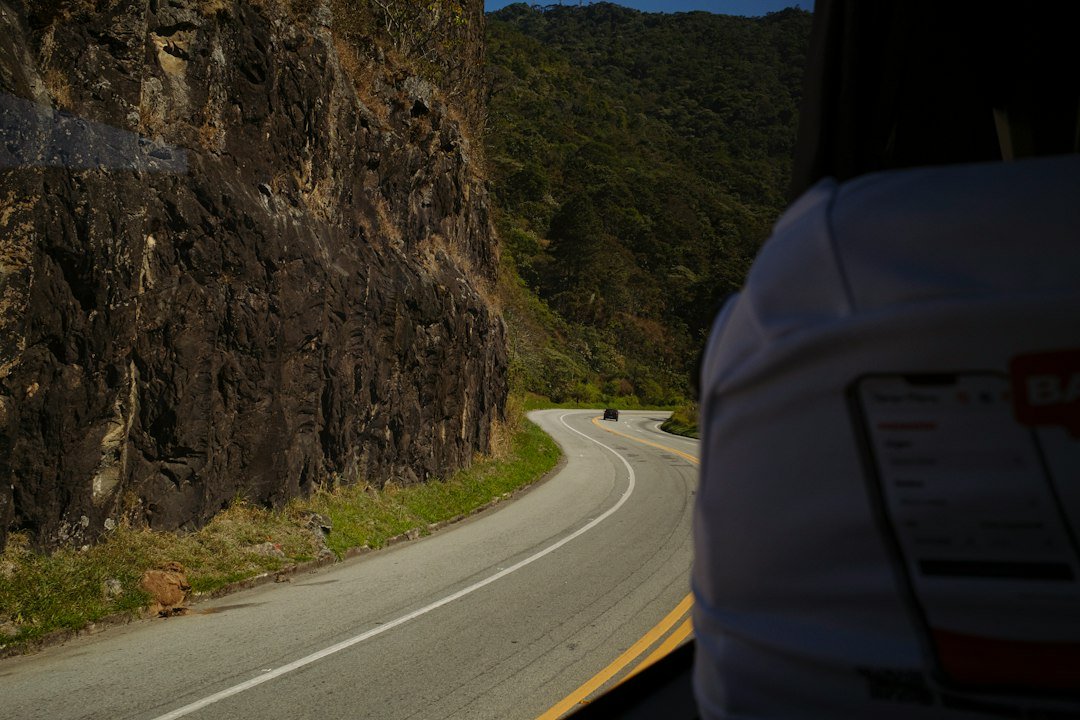
For downhill driving, shift to a lower gear before the grade steepens and let engine braking help hold your speed. Do it early. That is the practical answer to what is engine braking and how it works: when you lift off the accelerator, the wheels keep turning the engine through the transmission, and the engine’s internal resistance slows the vehicle without pressing the brake pedal. Your brakes still matter.
What is engine braking and how it works
In a gasoline or diesel vehicle, closing the throttle reduces the air entering the engine while the vehicle is still forcing the engine to spin. That resistance creates a slowing effect. In a manual transmission, selecting a lower gear raises engine speed for a given road speed and increases that effect. Lower gear, more slowdown.
An automatic transmission can do the same thing, although the driver may need to select L, 2, 3, S, B, or manual shift mode depending on the vehicle. Many newer automatics also downshift automatically when they detect a long descent or repeated brake use. The behavior varies. Check the owner’s manual or the manufacturer’s official website for the labels and limits on your specific vehicle.
Engine braking is most useful when a hill would otherwise make the vehicle gain speed faster than you want. Instead of riding the brake pedal for miles, choose a gear that lets the engine help maintain a sensible pace, then use brief, firm brake applications when needed to trim speed. This gives the brakes time to shed heat between applications.
It does not stop the car instantly. Engine braking is a speed-control tool, while the service brakes are still the primary way to slow quickly, stop, or respond to traffic.
Using engine braking for downhill driving
Pick your downhill gear before you are committed to the slope. A good starting point is the gear that would comfortably pull the vehicle uphill at that speed, though a loaded truck, trailer, steep grade, or mountain road may call for an even lower gear. Start slower.
- Reduce speed first. Brake to a safe speed before selecting a lower range or commanding a downshift.
- Select a lower gear. In a manual, release the clutch smoothly after the downshift. In an automatic, use the marked low range, sport mode, or paddle/manual control if your vehicle has one.
- Let the engine hold speed. Take your foot off the accelerator and watch whether speed stays steady, falls slightly, or still rises.
- Brake in short intervals if needed. Apply enough brake pressure to lower speed, release, then reassess. Do not rest your foot lightly on the pedal for the whole descent.
- Move lower only when appropriate. If speed keeps building despite normal brake use, slow down and select a lower gear if the vehicle allows it without exceeding the indicated engine-speed limit.
Keep your eyes farther ahead than usual. Mountain descents often tighten after a crest, and a gear that feels adequate on a straight section may not control speed before a sharp bend.
Choosing the right mode
| Vehicle type | Typical driver input | What to expect |
|---|---|---|
| Manual transmission | Downshift one gear at a time | Direct, predictable engine braking; engine rpm rises after each downshift. |
| Conventional automatic | Select L, 2, 3, S, or manual mode | The transmission holds a lower gear or permits commanded downshifts. |
| CVT automatic | Use L, B, S, or simulated manual ratios | The vehicle may raise engine rpm to create a stronger holding effect. |
| Hybrid or EV | Select B mode or increase regeneration level | Depending on the vehicle, motor regeneration may provide much of the slowing, though friction brakes may join in. |
Do not force a downshift at excessive speed. Many modern vehicles may refuse an unsafe shift, but that safeguard is not a reason to test the limits. If the tachometer approaches the red zone or the vehicle protests with warnings, vibration, or harsh shifting, use the brakes and select a less aggressive setting.
What engine braking does to the vehicle
Normal engine braking is part of ordinary driving and is not inherently harmful when you stay within the vehicle’s operating limits. It transfers some slowing work away from the brake pads and rotors, which can be helpful on long grades where overheated brakes lose effectiveness. Heat is the problem.
It can use a little more engine noise and raise rpm, especially in a lower gear. That is expected. A sudden metallic noise, slipping sensation, warning light, or unusually harsh transmission action is not something to ignore, and a shop should inspect the vehicle before the next mountain trip.
Engine braking is different from using the parking brake, and it is never a substitute for properly functioning service brakes. It is also different from shutting the engine off. Never switch off the engine while moving because steering assist, brake assist, stability systems, and other functions may be reduced or unavailable.
Common mistakes to avoid
The biggest mistake is waiting until the vehicle is already too fast. Downshift while there is room to slow smoothly, rather than trying to grab a very low gear after speed has built on the descent.
Do not coast in neutral. Neutral removes engine braking, leaves you dependent on the brakes, and may change how power steering or brake assist behaves in some vehicles. Stay in gear.
Do not ride the brakes continuously downhill. Constant light pressure can build heat without giving the brakes a chance to cool, especially in a heavy SUV, pickup, or vehicle towing a trailer. If you smell hot brakes, feel a soft pedal, or notice fading stopping power, pull over safely as soon as practical and let the brakes cool. Do not pour water on hot brake parts.
Towing changes the calculation. Trailer weight can push a vehicle downhill hard, so use the tow/haul mode if equipped, reduce speed early, and follow the vehicle and trailer manufacturer guidance for weight ratings and downhill operation.
FAQ
Does engine braking use more fuel?
Usually, lifting off the accelerator uses little fuel and many modern fuel-injected vehicles reduce or temporarily cut fuel during deceleration under certain conditions. The exact behavior depends on the engine calibration, gear, rpm, temperature, and vehicle design. Do not coast for fuel savings.
Is engine braking bad for an automatic transmission?
Using the intended low range, sport setting, tow/haul mode, or manual shift controls is normal use. It is fine when done at sensible road speeds. Repeatedly forcing abrupt downshifts, selecting a range the manual warns against, or ignoring transmission warnings can create problems.
Why does my car rev high downhill?
A higher rpm often means the transmission has selected a lower gear to increase engine braking. That is normal if rpm remains below redline and the shift feels smooth. Loud revving with a warning light or violent shift deserves attention.
Is B mode the same as engine braking in a hybrid or EV?
B mode usually increases deceleration, but its effect varies by vehicle and much of it may come from regenerative braking rather than engine pumping losses. The electric motor turns into a generator and sends energy back toward the battery when conditions allow. Battery temperature and charge level can limit regeneration.
Should I use engine braking on icy roads?
Use it gently. A smooth lift of the accelerator or mild lower-gear selection can help, but an abrupt downshift can upset traction at the driven wheels. Leave more following distance, avoid sudden inputs, and let the vehicle’s stability systems do their job.
Related posts
This article is for general informational purposes only and is not mechanical or legal advice. Always follow your vehicle’s owner’s manual and manufacturer guidance for downhill driving and engine braking.
Disclosure: This post may contain affiliate links. If you click through and make a purchase, we may earn a commission at no extra cost to you. We only recommend products we’ve researched or genuinely believe in.