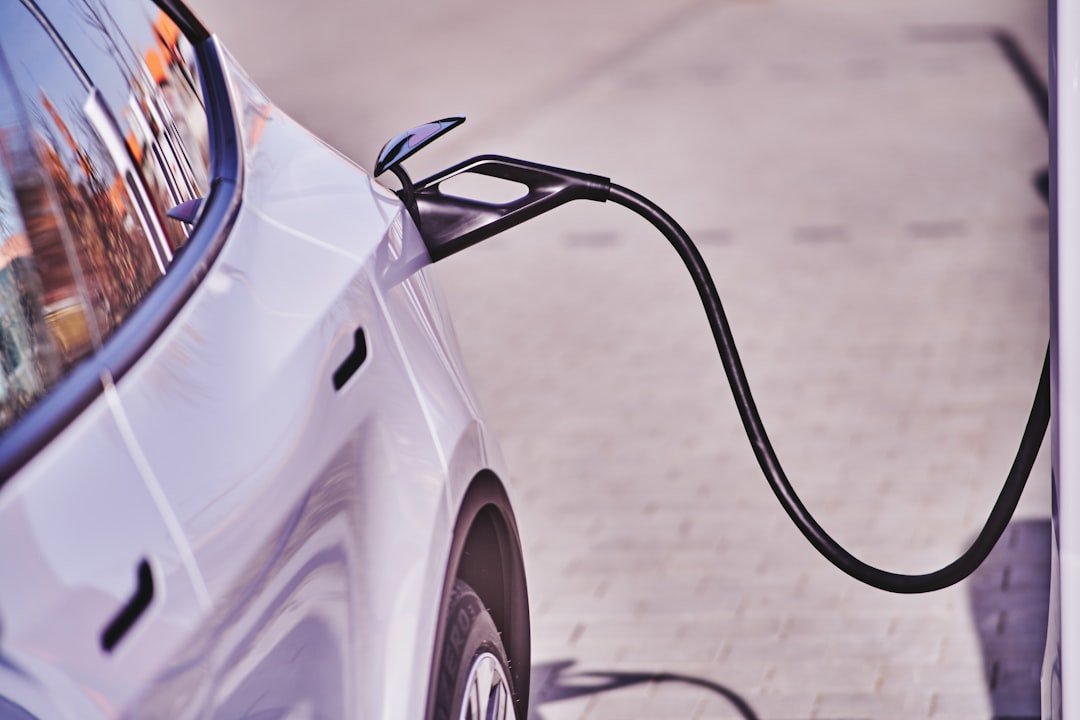
The difference between MPG and MPGe is simple: MPG measures miles traveled per gallon of gasoline, while MPGe measures how far a vehicle travels using an amount of electricity with the same energy as one gallon of gasoline. They are not interchangeable. For most hybrid and EV shoppers, use MPG to compare gasoline vehicles and MPGe to compare electric driving efficiency, then make the purchase decision based on charging access, range, and real energy costs instead of chasing the largest number on the window sticker.
My clear recommendation is this: if you have dependable home charging and your normal driving fits the vehicle’s range, choose an EV with good MPGe over a conventional hybrid when lower day-to-day energy cost is your priority. Home charging changes everything. If you rent without charging, park on the street, take frequent long trips through thin charging areas, or simply do not want to plan around plugs, buy the high-MPG hybrid instead because its efficiency is easier to use every day.
What is the difference between MPG and MPGe in real use
MPG means miles per gallon. It tells you how many miles a gasoline-powered vehicle can travel on one gallon of fuel under the government test procedure used for its fuel-economy label. A vehicle rated at 30 MPG should use about one gallon to travel 30 miles under comparable conditions. Real life varies. Cold weather, short trips, cargo, tire pressure, speed, hills, and a heavy right foot can all lower the result.
MPGe means miles per gallon equivalent. It is an electricity-efficiency rating used for EVs and for the electric portion of plug-in hybrids. The Environmental Protection Agency uses the energy in 33.7 kilowatt-hours of electricity as the equivalent of the energy in one gallon of gasoline, then calculates how far the vehicle travels using that amount of energy. It is an energy comparison. Your EV does not burn a hidden gallon of fuel.
That 33.7 kWh figure is why MPGe can look huge beside MPG. An EV rated at 120 MPGe is not somehow four times as fast or four times as useful as a 30-MPG hybrid. It uses energy efficiently. The rating says that, under the label test, the EV can travel about 120 miles using electricity with the same energy content as a gallon of gasoline.
Think of MPG as a fuel-pump number. Think of MPGe as an energy-use number. Both are useful, but they answer slightly different questions because gasoline and electricity are bought, stored, and used in different ways. That distinction matters most when a shopper assumes 100 MPGe means the EV will always cost less than a 50-MPG hybrid. Usually it will when charged at home, but electricity prices and charging habits still decide the bill.
Why MPG and MPGe cannot be compared like identical numbers
A 50-MPG hybrid and a 100-MPGe EV should not be judged as though the EV gets exactly twice the economy at every fuel price. The units share a common energy reference, but you pay for gasoline by the gallon and electricity by the kilowatt-hour. Your local rates matter. Public fast charging can cost much more per unit of energy than overnight home charging, especially when a station bills by time or adds session fees.
Gasoline also has one big convenience advantage. You can usually refill quickly, and the vehicle carries a lot of usable energy in a small tank. An EV uses less energy to move down the road, but charging takes longer and station availability differs by route. This is practical stuff. A more efficient EV is still a poor fit for a driver who cannot charge where the car normally sits.
MPGe also does not tell you electric range. Two EVs can have similar MPGe ratings while one travels much farther because it has a larger battery pack. The efficient one may need less electricity per mile, while the longer-range one carries more stored energy. Battery size affects cost, weight, charging time, and range. MPGe only covers one part of that picture.
Likewise, MPG does not tell you how far a gasoline or hybrid vehicle can travel between stops. A 40-MPG compact with a small tank may have less cruising range than a 30-MPG SUV with a much larger tank. Tank capacity matters. It is the same basic relationship as an EV’s efficiency rating and battery capacity, even though the refueling experience is very different.
How hybrids use MPG
A regular hybrid, sometimes called a non-plug-in hybrid, uses gasoline as its outside energy source. Its battery captures some braking energy and helps the engine during certain conditions, but you do not plug it into a wall. For that reason, its main official efficiency figure is MPG. Easy enough.
Hybrid MPG is often strongest in urban driving because the system can recover some energy during braking and can reduce engine idling. Highway results may still be good, but the advantage over a similar gasoline vehicle can narrow at steady high speed. Aerodynamic drag rises fast. If most of your miles are long, fast motorway or interstate runs, look at the highway MPG figure instead of focusing only on the combined rating.
When comparing two conventional hybrids, higher combined MPG is usually the better efficiency choice if their size, price, comfort, safety equipment, and towing needs are otherwise similar. That is a clean comparison because both vehicles use gasoline. Still, do not pay a large premium for a tiny MPG gain without doing the math. The fuel savings may take years to cover the difference.
For example, driving 12,000 miles per year in a 40-MPG hybrid uses about 300 gallons. A 50-MPG hybrid uses about 240 gallons for the same distance. That is a 60-gallon annual difference. At $3.50 per gallon, the gap is about $210 per year before changes in fuel prices, driving conditions, or maintenance costs. Small numbers add up slowly.
How EVs use MPGe
A battery-electric vehicle has no gasoline engine and no tailpipe fuel use, so MPG would make no sense as its primary rating. MPGe gives shoppers a familiar way to compare electric efficiency. Higher MPGe means the EV needs less electrical energy to cover a mile. That usually means lower charging cost per mile.
You may also see energy consumption written as kilowatt-hours per 100 miles, often shortened to kWh/100 miles. This is the same story told in a more direct unit. Lower is better. A vehicle that uses 28 kWh per 100 miles is more efficient than one that uses 36 kWh per 100 miles, assuming similar test conditions.
The conversion is straightforward if you want to check the math. Divide 33.7 by the MPGe rating to estimate kWh per mile, then multiply by 100 for kWh per 100 miles. An EV rated at 120 MPGe works out to roughly 28.1 kWh per 100 miles. This makes utility-rate comparisons much easier than trying to mentally translate a three-digit MPGe number.
Suppose your electricity rate is $0.16 per kWh and an EV uses 28.1 kWh per 100 miles. The energy cost is roughly $4.50 per 100 miles, before considering the particular charging arrangement and any extra utility fees. A 50-MPG hybrid at $3.50 per gallon costs about $7 per 100 miles. That is why efficient EVs can be cheap to run at home.
Public charging can change that comparison. If you mostly rely on expensive rapid chargers, the EV’s energy bill can approach or exceed the cost of running an efficient hybrid, depending on local gasoline and charging prices. It can still be the right vehicle. Just do not buy it on a home-charging cost calculation that you cannot actually use.
Plug-in hybrids need extra attention
A plug-in hybrid, often called a PHEV, has both a gasoline engine and a battery large enough for meaningful electric driving. It can use MPGe while operating on electricity, then use gasoline and receive an MPG rating after its battery charge is depleted. It has two modes. That is why a plug-in hybrid label needs more careful reading than a normal hybrid or a pure EV label.
Do not treat a PHEV’s combined MPGe number as a promise for your personal ownership experience. A driver who plugs in nightly and takes short daily trips may complete most local driving on electricity. Another driver with the same vehicle who rarely plugs in may burn gasoline nearly all the time, while carrying the extra weight and complexity of the plug-in hardware.
Start with your weekday distance. If your usual round trip fits within the vehicle’s rated electric range with some room for weather and detours, and you can charge at home or at work, a PHEV can make sense. Plug it in. If your daily travel regularly exceeds the electric range or charging will be a hassle, a conventional hybrid is generally the smarter and simpler choice.
For PHEVs, look at four label items together: electric range, MPGe, gasoline-only MPG, and annual energy-cost estimate. None works alone. A long electric range is useful only if you will recharge often, while a strong gasoline-only MPG figure matters for holiday travel, missed charging days, and long work runs.
Use the labels without getting fooled
The window label is a starting point, not a personal guarantee. EPA test results allow a fair comparison between vehicles, but your commute may be colder, hillier, faster, or more stop-and-go than the test route. Weather hits EV range hard. Cabin heat, a roof box, winter tires, and sustained high speed can all increase energy use.
For an EV, compare MPGe and rated range on the same type of vehicle. A small sedan with higher MPGe may consume much less power than a large electric SUV, but the SUV may carry more people, luggage, or towing equipment. Buy the vehicle that fits. Efficiency is one operating-cost input, not the whole ownership experience.
For a hybrid, compare city, highway, and combined MPG based on where you actually drive. A suburban commuter with a mixed route can use combined MPG as a useful first filter. A driver who spends most days at 75 mph should give the highway figure more weight. Honest route matching beats brochure math.
Also check whether the quoted figure is for the exact wheel and tire package you want. Larger wheels and wider tires often reduce both MPG and MPGe. The difference may not look dramatic on a spec sheet, but it lasts every mile and can cut EV range enough to matter on a regular trip. Verify the label for the actual trim with the dealer or manufacturer before signing.
A quick way to compare your own costs
Use a simple annual-mileage estimate before you narrow the shortlist. Keep the calculation modest. It will not predict every fuel bill, but it quickly exposes whether a claimed efficiency advantage is meaningful for your budget.
- Write down your expected annual miles. Use your last service record or insurance renewal mileage if you are unsure.
- For a hybrid, divide annual miles by MPG, then multiply the gallons by your expected price per gallon.
- For an EV, use the vehicle’s rated kWh per 100 miles or convert its MPGe, then multiply the needed kWh by your home electricity rate.
- For a PHEV, estimate the miles you will genuinely drive electrically and calculate the remaining miles using gasoline-only MPG.
- Add realistic charging costs. Include public charging if that will be part of your routine.
Here is a useful threshold. If you can charge where you live at least several nights each week and the EV covers your normal day without a midday stop, an EV deserves serious priority over a hybrid. That is the common winning case. If charging depends on a public station you may or may not reach after work, skip the optimistic spreadsheet and choose the high-MPG hybrid.
The choice for most shoppers
MPG tells you gasoline efficiency. MPGe tells you electric energy efficiency. Neither number says whether the vehicle suits your parking situation, your road trips, or your local utility bill. Those questions decide the better purchase.
For a shopper with a driveway, garage, or reliable workplace charger, I would choose the EV if its range comfortably covers normal use and its price fits the budget. Charging at home makes the ownership routine simple, and high MPGe means you use fewer kilowatt-hours every mile. Check winter range. Then choose the vehicle rather than the headline number.
For a shopper without reliable charging, I would choose a conventional hybrid with strong real-world-relevant MPG. You fill it in minutes, take any trip without a charging plan, and still save substantial fuel compared with many gasoline-only vehicles. It is the low-friction answer. A PHEV only earns its extra cost and complexity when it will be plugged in consistently.
Do the math with your own rates, review the official label for the exact trim, and take a test drive that includes the roads you use every week. Numbers narrow the field. Your routine picks the winner.
Related posts
This article is for general informational purposes only and is not mechanical, legal, financial, or insurance advice. Prices, insurance rates, tax credits, and manufacturer-stated fuel economy or EV range are estimates that change over time and vary by vehicle, region, and provider — always verify current figures with a dealer, mechanic, insurer, or official source before making a decision.
Disclosure: This post may contain affiliate links. If you click through and make a purchase, we may earn a commission at no extra cost to you. We only recommend products we’ve researched or genuinely believe in.