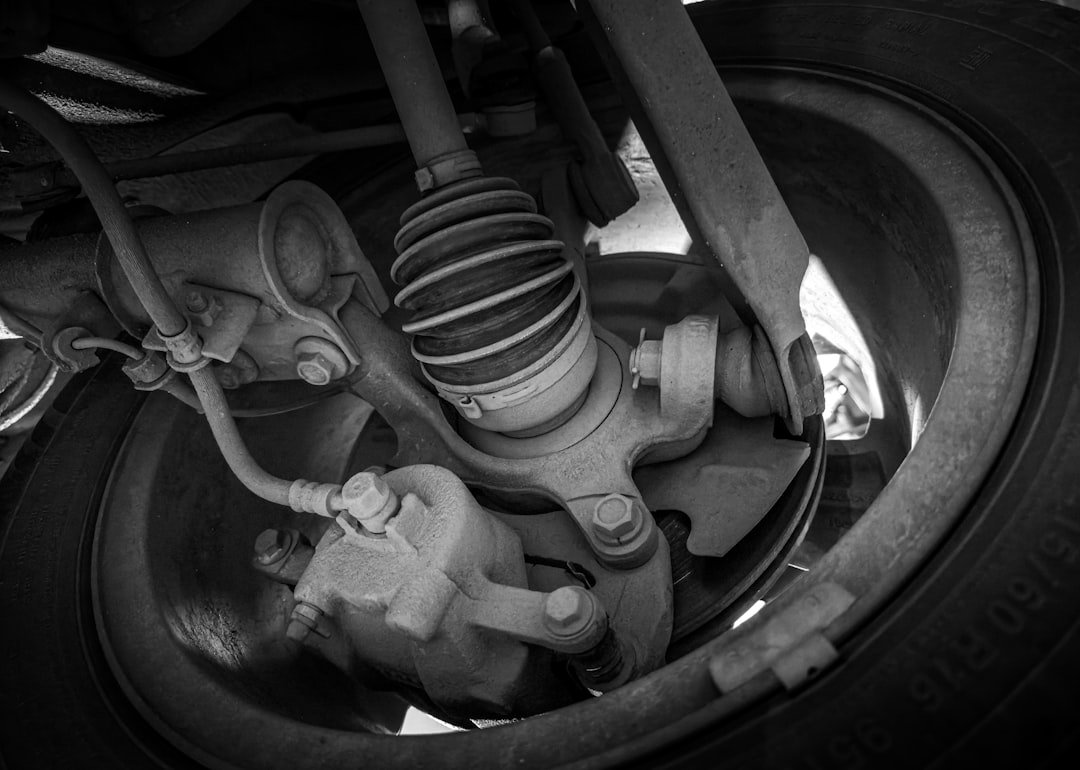
If you are asking what is torque vectoring in cars, check your owner’s manual, window sticker, or manufacturer specifications before assuming your vehicle has the real thing. Names get reused. What is torque vectoring in cars? It is a system that changes how much turning force reaches individual wheels, or applies brake force to one wheel, so the vehicle can follow a corner more cleanly.
At its best, torque vectoring helps a car rotate into a bend instead of plowing wide at the front tires. The effect can feel subtle. On a quick road or track, though, it can make a heavy SUV feel less reluctant to turn and make a performance car feel more settled when power goes down near a corner exit.
What is torque vectoring in cars?
Torque is the twisting force an engine or electric motor sends through the driveline to turn the wheels. Torque vectoring is the controlled distribution of that force between the left and right wheels, and sometimes between the front and rear axles. The outside wheel travels farther in a corner. It also usually has more available grip because cornering shifts some vehicle weight outward.
A torque-vectoring system takes advantage of that difference. It can send more drive torque to the outside rear wheel, for example, which creates a yaw moment that helps point the nose toward the inside of the turn. Think of yaw as rotation. The car turns around its vertical centerline instead of simply being pushed straight ahead.
The simplest systems do not truly transfer extra engine power across the axle. They briefly brake the inside wheel when it spins or when the computer detects understeer, which allows an open differential to send more usable torque to the other side. It works. But brake-based torque vectoring adds heat and can feel less natural during hard, repeated driving.
More advanced systems use an electronically controlled limited-slip differential, clutch packs, gears, or separate electric motors. Those setups can actively direct torque without relying as heavily on the brakes. Hardware matters. A rear electric motor on each wheel can react very quickly because software controls each motor independently, while a mechanical rear differential has different limits and feel.
How torque vectoring improves handling
Handling is mostly about tire grip, weight transfer, steering geometry, suspension tuning, and the driver’s inputs. Torque vectoring cannot create unlimited grip. It helps use the grip already available at each tire more effectively, especially when cornering and accelerating happen at the same time.
In a front-wheel-drive car, a brake-based system often slows the inside front wheel during a turn. That may reduce the familiar front-end push called understeer, where the steering wheel is turned but the car wants to continue toward the outside of the curve. Less understeer feels good. It can also help the outside front tire pull the car around the corner.
In a rear-wheel-drive car, an active rear differential can give the outside rear tire more torque during acceleration out of a bend. This encourages the car to rotate without the abrupt feel that can come from simply adding throttle to a conventional rear-drive car. The driver still needs smooth inputs. Too much speed will overwhelm the tires regardless of the differential.
All-wheel-drive vehicles have another opportunity. Their systems may adjust torque front to rear, then also split torque across an axle, depending on the design. That can help an SUV pull through a loose or wet corner with less wheelspin. It does not turn all-wheel drive into a license to drive faster in poor conditions.
The biggest everyday benefit is predictability. When the system is calibrated well, the vehicle responds more closely to the steering angle you requested, and it needs fewer obvious corrections when you accelerate through a bend. That does not always feel dramatic. Sometimes the best systems simply make the car feel unusually composed.
| System type | How it works | Typical handling effect | Main trade-off |
|---|---|---|---|
| Brake-based vectoring | Brakes an inside wheel to control slip and yaw | Can reduce understeer and tidy cornering | Brake heat and pad wear during hard use |
| Active differential | Uses clutches or gears to vary torque across an axle | Stronger acceleration out of corners and smoother rotation | More complex and expensive hardware |
| Dual-motor electric setup | Controls separate motors on left and right wheels | Fast, precise torque changes under power | Results depend heavily on software calibration |
| Center-coupling AWD system | Changes torque between front and rear axles | Improves traction balance and stability | May not independently vector side to side |
What torque vectoring is not
Torque vectoring is often confused with traction control, stability control, and a limited-slip differential. These systems can overlap, and many modern vehicles use them together. They are not identical. The label on a brochure may also describe a fairly basic brake intervention rather than a dedicated active differential.
Traction control primarily limits wheelspin. Stability control watches whether the vehicle is following the driver’s intended path and can reduce engine power or brake selected wheels when it detects a skid. Torque vectoring focuses on distributing or managing drive force to influence how the vehicle turns. The line gets blurry because brake-based vectoring uses the same brakes and sensors.
A traditional limited-slip differential also differs from active torque vectoring. A limited-slip unit restricts the speed difference between the two wheels on an axle, so it can send power to the wheel with grip when the other starts slipping. It is a useful upgrade. But unless it has electronic control or a special gear arrangement, it generally cannot command torque side to side as precisely as an active system.
Do not confuse it with four-wheel steering either. Rear-wheel steering physically changes the angle of the rear wheels, while torque vectoring changes the forces at the tires. Some performance vehicles use both. They can complement each other, but they solve cornering behavior in different ways.
When you will notice it most
You are most likely to feel torque vectoring on a curved on-ramp, a tight mountain road, an autocross course, or a damp corner where one tire starts to lose traction. Straight-line cruising tells you little. The system needs a difference in wheel load, speed, or grip to show what it can do.
Try a safe, legal comparison if your vehicle has selectable drive modes. Use the same familiar dry corner at a conservative speed in its normal mode, then repeat on another day in the sport-oriented mode if the manual says that mode changes differential or vectoring behavior. Stay well below the limit. Notice whether the steering needs less correction as you gently add throttle after the apex.
Do not test this in traffic or on public roads at speeds that leave no margin. A system can mask mild mistakes, which is exactly why drivers sometimes overestimate what it can handle. Tires remain the final authority. Worn all-season tires, incorrect pressures, poor alignment, and a slick surface can erase much of the benefit.
For a practical tire check, measure pressures cold and use the placard pressure listed on the driver-side door area, not the maximum number molded into the tire sidewall. Then inspect tread depth and look for uneven wear across the shoulders. Start there. A vehicle with healthy tires and alignment usually gains more real-world confidence than one with a clever differential and neglected basics.
Is torque vectoring worth paying for?
It can be worth paying for if you regularly drive twisty roads, tow on mixed surfaces, attend track days, or want a larger vehicle to feel more controlled in corners. The value depends on the implementation. An active rear differential or separate electric motors usually have a more noticeable effect than a software-only brake system, but the vehicle’s suspension and tires still shape the result.
For a commuter that mostly sees flat highways, the difference may be hard to justify as a standalone option. Spend wisely. Better tires, proper maintenance, and driver training often make a larger difference to everyday safety and enjoyment than a high-end driveline package.
Also consider long-term ownership. Active differentials, transfer cases, clutch packs, and related sensors add complexity, and some systems require specific lubricants or service intervals. Check the maintenance schedule. Before buying used, have a qualified shop inspect the driveline and scan for stored fault codes, especially if the vehicle has warning lights, binding during tight turns, unusual noises, or a history of track use.
Common limits and misconceptions
Torque vectoring cannot overcome basic physics. If all four tires are on ice, sending torque to a different wheel will not produce the grip available on dry pavement. The system may help the vehicle remain more manageable. It cannot manufacture traction.
It also cannot fix a bad driving line. Entering a corner too fast loads the front tires heavily, and adding more steering usually makes understeer worse. Ease off smoothly if conditions allow. Abrupt lifting, braking, or steering can upset the vehicle and trigger stability control intervention.
Some drivers expect every torque-vectoring vehicle to feel eager to oversteer. That is not the goal of most factory calibrations. Manufacturers usually tune these systems to make the vehicle stable, predictable, and quicker through a corner rather than loose or dramatic. A performance setting may allow more rotation, but it still has protective limits unless driver aids are reduced or disabled.
Maintenance also affects operation. Low or incorrect differential fluid, mismatched tire sizes, widely different tread depths on an all-wheel-drive vehicle, and damaged wheel-speed sensors can cause driveline problems or disable electronic systems. Keep tires closely matched across an axle. Consult the vehicle manual and a shop before replacing only one tire on a vehicle with an all-wheel-drive system.
FAQ
Does torque vectoring make a car faster?
It can improve corner-exit speed when it helps the driven tires use available grip without excessive wheelspin or understeer. It is not magic. On a straight road, it usually provides little performance benefit, and a slower corner entry still cannot be fixed by applying more power.
Is brake-based torque vectoring bad for brakes?
Normal road use usually does not create the repeated brake temperatures seen during track driving. Hard use is different. Brake-based systems can wear pads faster and heat the brakes because they use braking force as part of the handling strategy, so inspect pads and fluid on the normal schedule and sooner after aggressive driving.
Do all-wheel-drive cars have torque vectoring?
No. Many all-wheel-drive systems only vary torque between the front and rear axles, while others have an open differential at each axle and rely on the brakes for wheelspin control. Read the manufacturer description carefully. The words “torque vectoring” may refer to side-to-side control, front-to-rear control, or brake intervention.
Can torque vectoring help in snow?
It can help a vehicle use uneven available traction and may make turns feel more controlled at low speeds. Winter tires matter more. Dedicated winter tires have rubber compounds and tread designs intended for cold, snow, and slush, while torque vectoring only manages the grip the tires can find.
Can I add torque vectoring to my car?
Adding a true factory-style system is rarely simple because it needs compatible differentials or motors, sensors, control modules, wiring, and calibration. Some vehicles can accept a mechanical limited-slip differential, which may improve traction but is not the same as active vectoring. Discuss the full cost, compatibility, warranty impact, and installation work with a reputable specialist before buying parts.
Related posts
This article is for general informational purposes only and is not mechanical, legal, financial, or insurance advice. Prices, insurance rates, tax credits, and manufacturer-stated fuel economy or EV range are estimates that change over time and vary by vehicle, region, and provider — always verify current figures with a dealer, mechanic, insurer, or official source before making a decision.
Disclosure: This post may contain affiliate links. If you click through and make a purchase, we may earn a commission at no extra cost to you. We only recommend products we’ve researched or genuinely believe in.